
Last updated September 20, 2026
Free on-site gate assessment - hinges, posts, and your LiftMaster or Nice gate operator checked before anything is quoted
The assessment is free and the quote is the invoice.
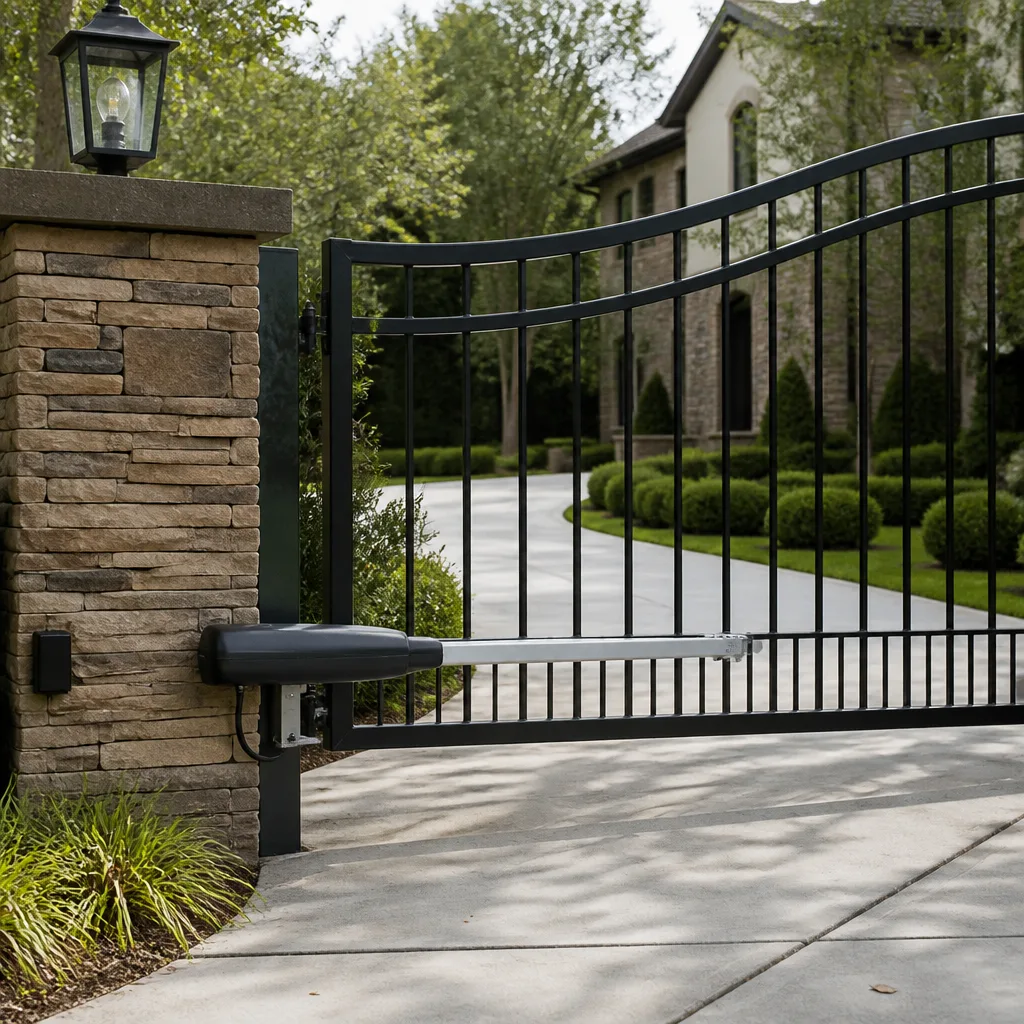
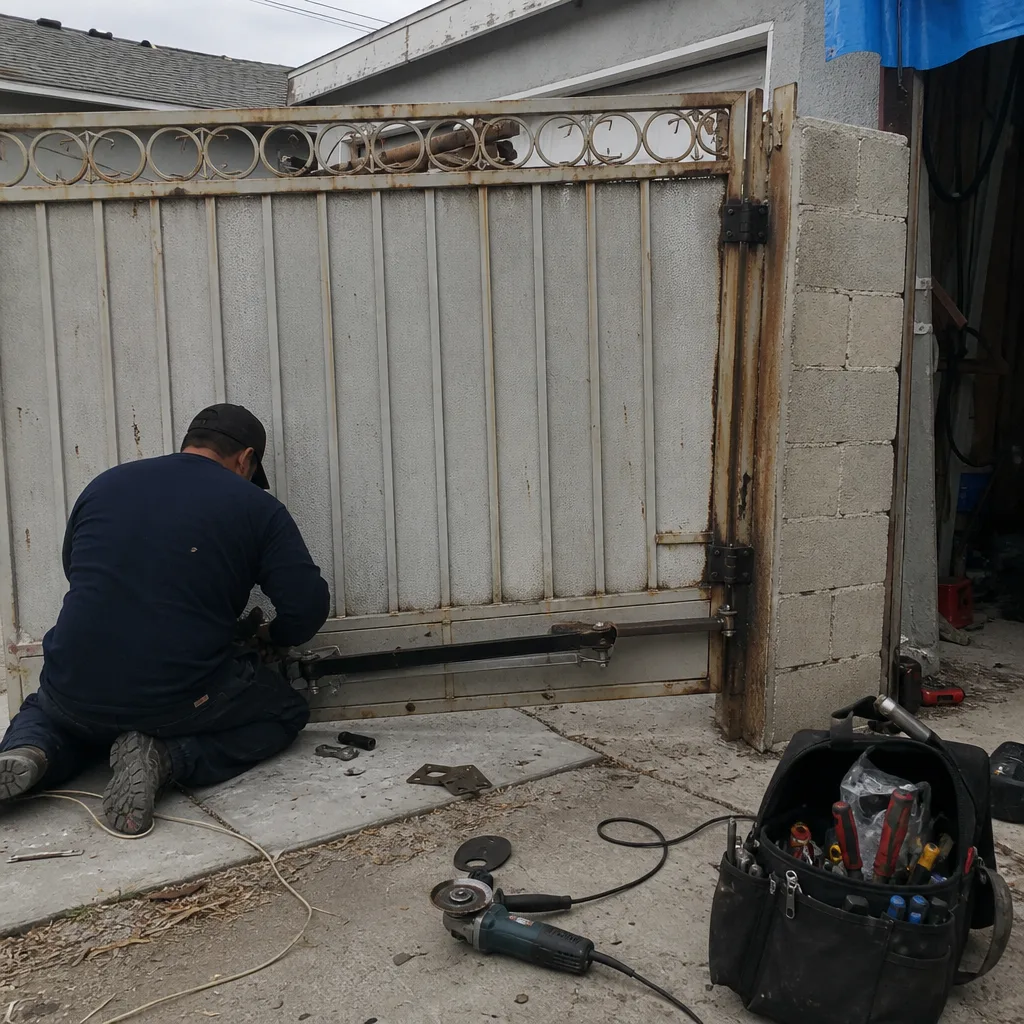 Before
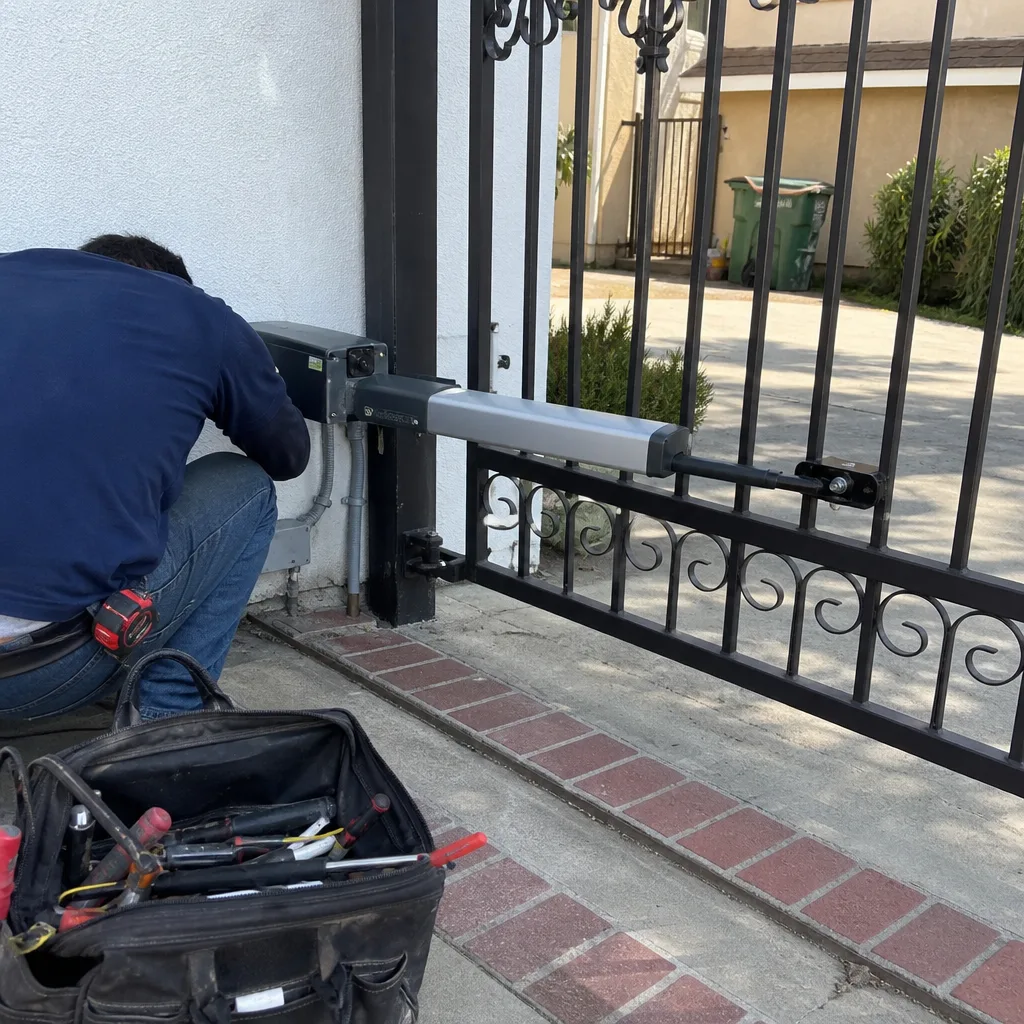 After
After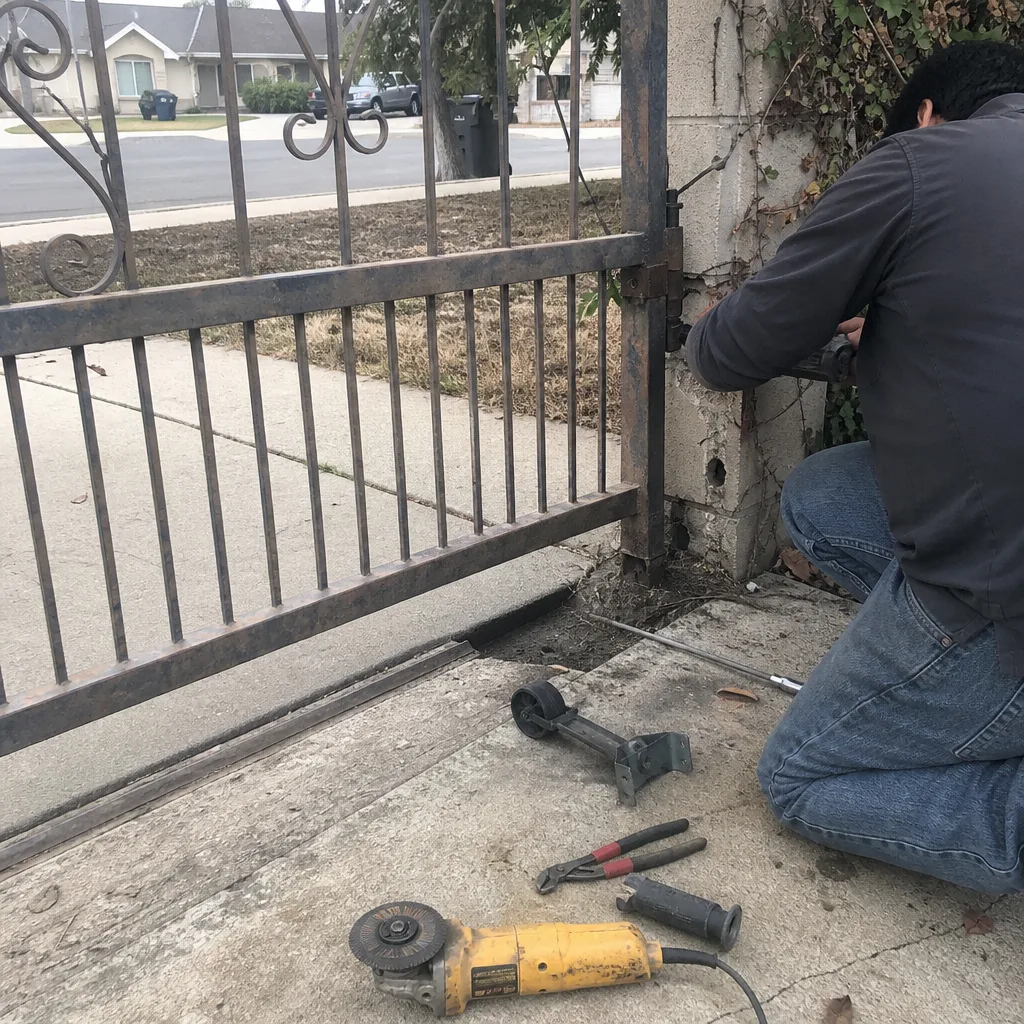 Before
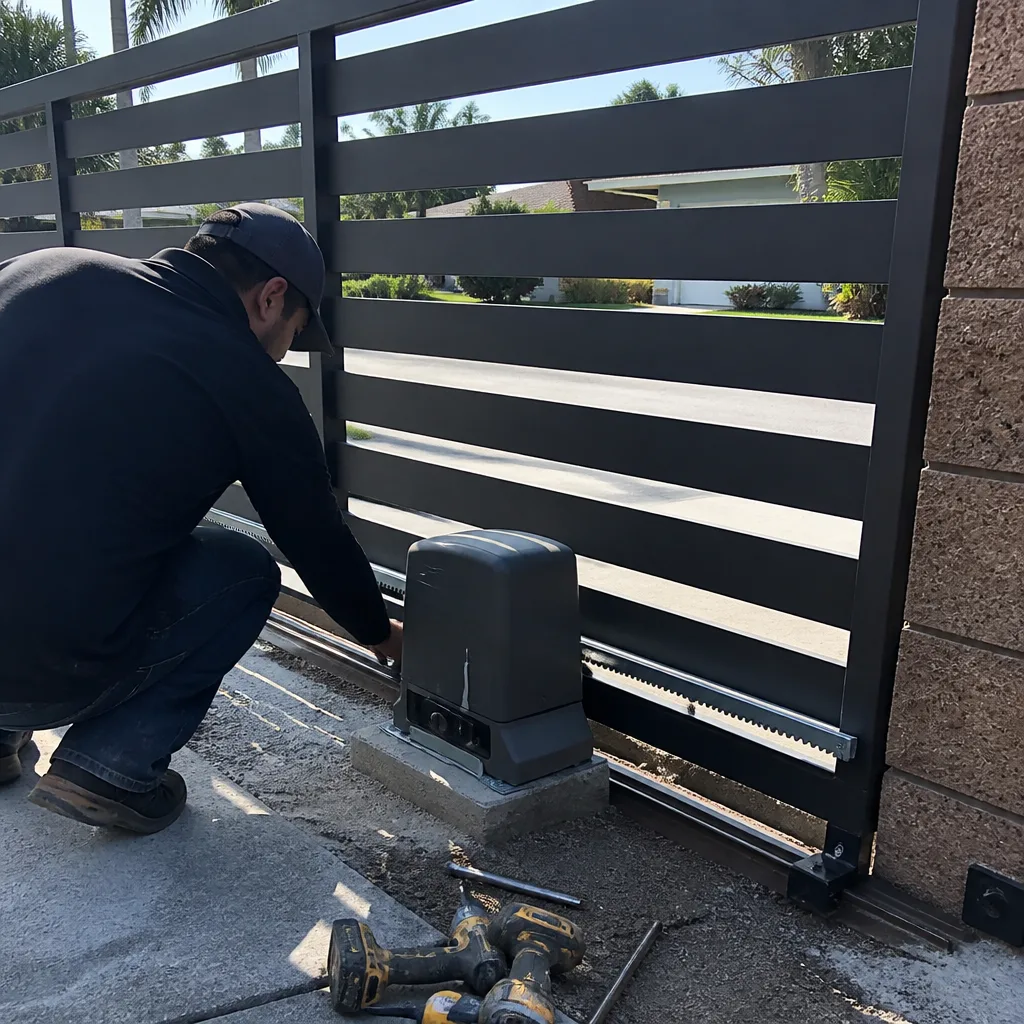 After
After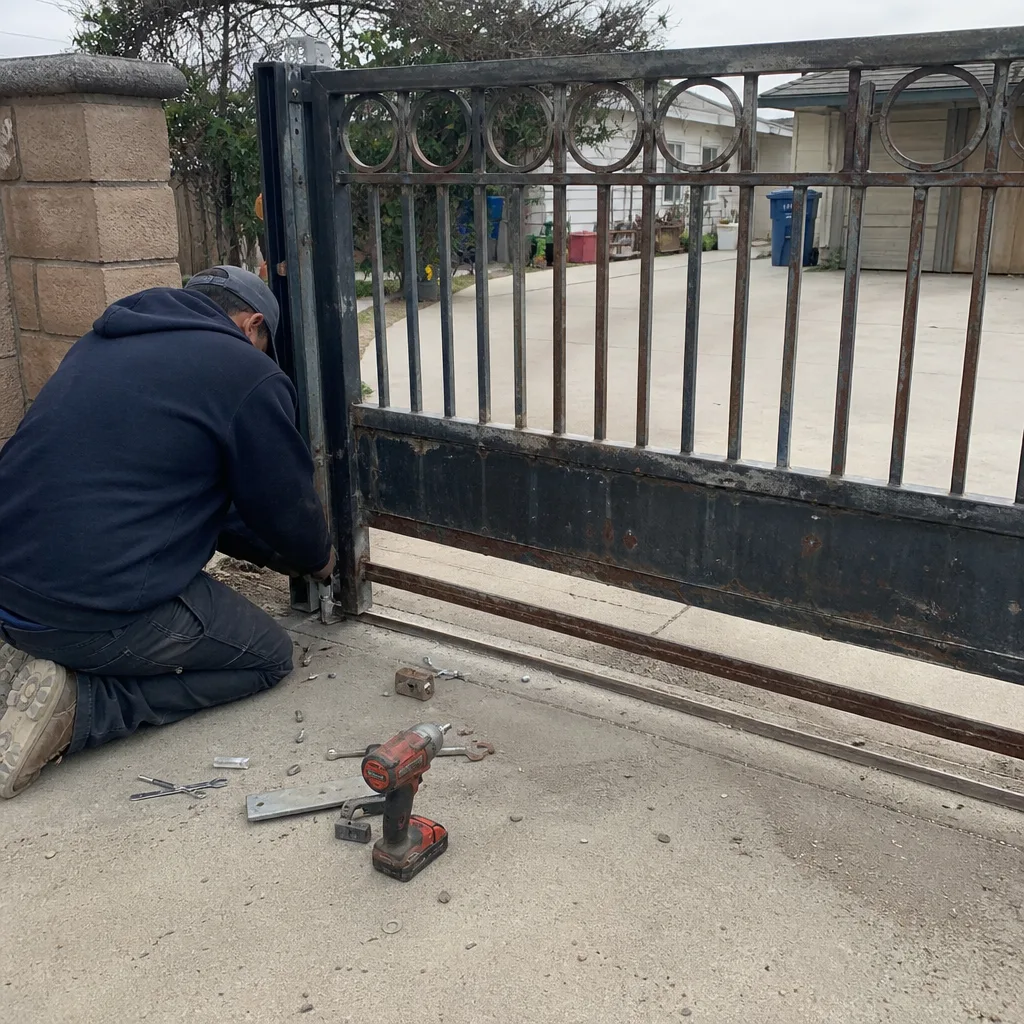 Before
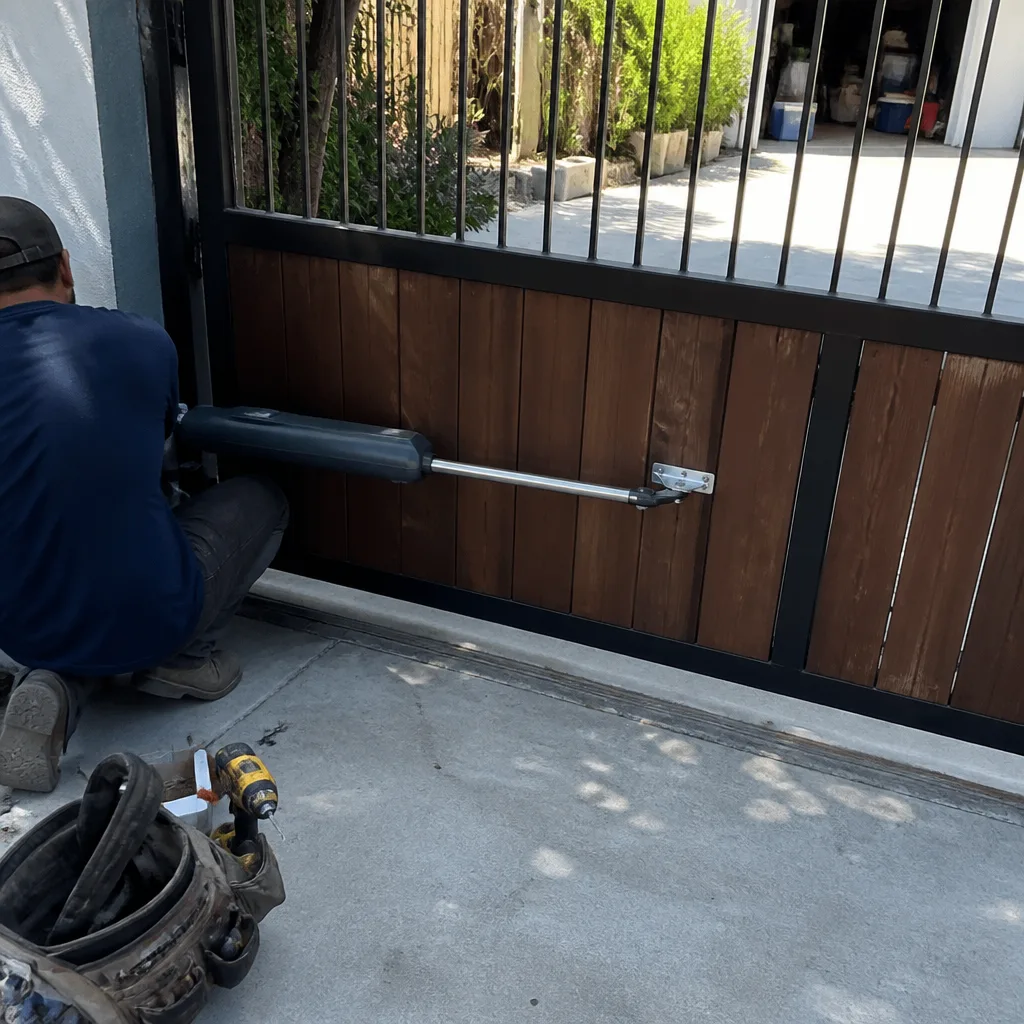 After
AfterGate Repair Permits, Codes & Inspections in CA: What You Need to Know
If you replace a gate operator on a commercial property in Santa Ana and don’t pull an electrical permit, the next entrapment injury exposes you to a liability argument that the installation was unpermitted. Most gate companies don’t mention this. They also don’t mention that most residential gate repairs need no permit at all, which creates a strange landscape: the law is mostly silent right up until the moment it becomes very loud. This guide maps exactly where that line sits in Santa Ana and Orange County, because the difference between a maintenance call and an alteration is where permits, inspections, and liability all start. For related reading, see our Gate Repair Warning Signs: A Santa Ana Homeowner’s Reference Guide.
What you’ll learn: which specific gate repairs cross the permit threshold in Santa Ana, what a building inspector actually checks on a gate operator, how UL 325 entrapment standards drive the inspection, why HOA approval and city permits are separate tracks, and how an unpermitted gate becomes a title-report problem at escrow.
Quick Answer
Most residential gate repairs in California, including Santa Ana, do not require a building permit because they qualify as routine maintenance: replacing a hinge, swapping a photo-eye, or putting in a new circuit board on an existing operator. A permit is generally required when the work is an alteration or new installation: a new gate structure, a new operator with new electrical, or any commercial gate change. When a permit is pulled, the Santa Ana Building Division inspection focuses on UL 325 entrapment protection and the electrical connection, not the cosmetic condition of the gate.
Table of Contents
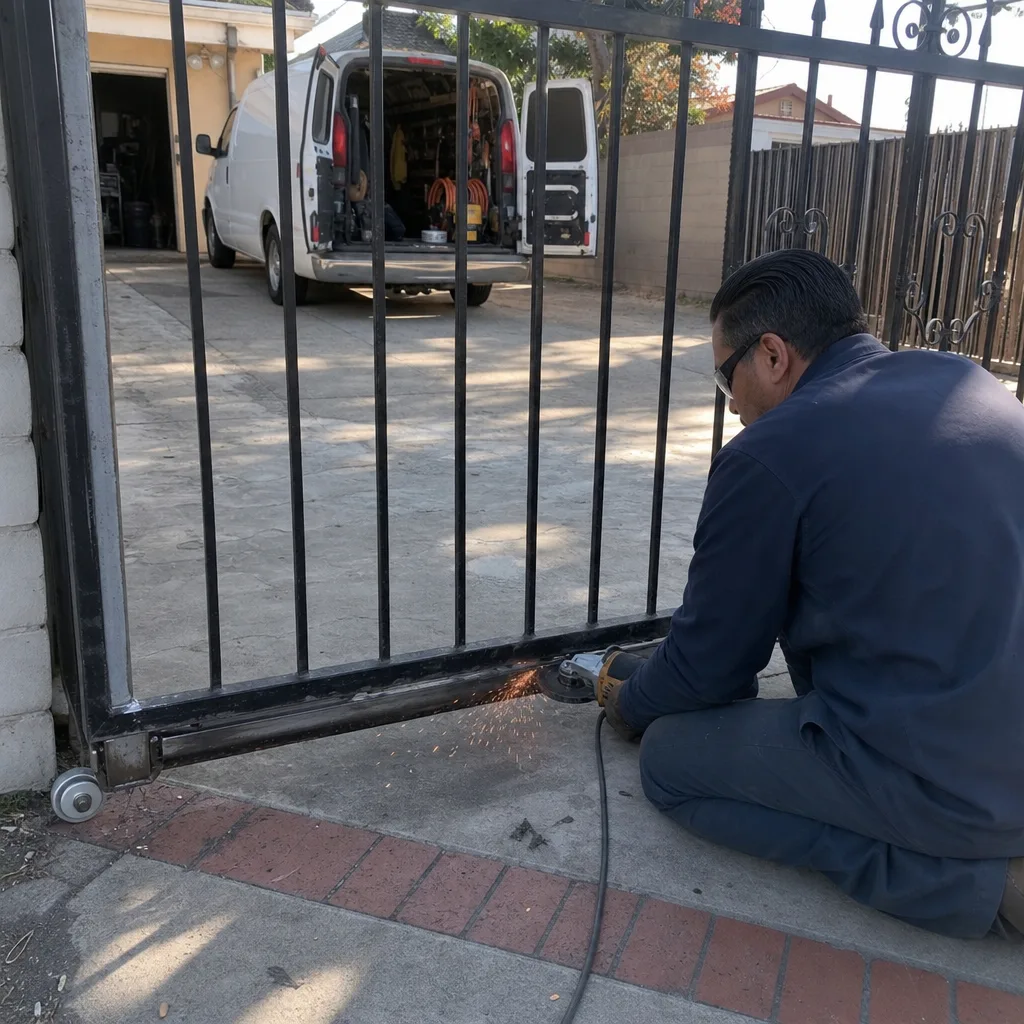
- The Santa Ana Permit Threshold: Maintenance vs. Alteration
- UL 325 and What an Inspector Actually Checks at the Operator
- HOA Approval vs. City Permit: Two Separate Tracks
- Unpermitted Gates and the Title Report at Escrow
- How to Verify a Contractor Pulled the Permit in Your Name
- Santa Ana-Specific Codes, Climate, and Gate Construction Notes
- What Permits and Inspections Cost in Orange County
- Common Mistakes to Avoid
- When to Call a Professional
- Frequently Asked Questions
- The Bottom Line
BeforeAfterThe Santa Ana Permit Threshold: Maintenance vs. Alteration
The City of Santa Ana operates under the California Building Code (CBC) and its own municipal amendments. The Building Division draws a line between repair work that restores a gate to its original condition and work that changes the gate’s design, capacity, or electrical footprint. That line is the entire permit question.
Here is the practical breakdown, based on how the Santa Ana Building Division classifies typical gate work:
No Permit Required (Routine Maintenance)
- Replacing a worn hinge, a damaged wheel, or a bent track section on an existing gate
- Swapping a photo-eye sensor, keypad, or edge sensor where the wiring stays in place
- Replacing a circuit board or limit switch inside an existing operator enclosure
- Welding a cracked gate frame member to restore original strength, where the gate’s footprint does not change
- Adjusting the operator’s force, travel limits, or close speed
Permit Required (Alteration or New Installation)
- Installing a new gate where none existed before
- Replacing an entire gate with a larger or heavier design
- Adding a gate operator to a manual gate (new electrical circuit)
- Replacing an operator in a way that changes the electrical service size
- Many commercial gate changes, even where the visual result looks identical to the old setup
The reason commercial work behaves differently deserves attention. Santa Ana’s permit rules follow the CBC’s commercial provisions, which treat a gate operator as part of the building’s electrical and life-safety systems. Replacing an operator on a commercial driveway or parking-lot gate in Santa Ana means running new conduit or a new circuit in many cases, and that crosses into California Electrical Code territory. The permit is not optional at that point.
We’ve seen this exact scenario in Orange County more times than we can count: a commercial property owner gets a gate operator replaced under a verbal handshake, no one pulls anything, and three years later an entrapment claim surfaces. The plaintiff’s attorney asks for the permit record. When there is none, the property owner sits in a much worse negotiating position, regardless of what the gate was doing that day.
The Santa Ana-Specific Rules That Trip People Up
Santa Ana is a dense, older city. Many residential lots are narrow, and the front setback rules in Santa Ana mean a driveway gate often sits close to the property line. If the work changes a gate’s swing path so that it now projects over a city sidewalk or into a public right-of-way, the city treats it as an encroachment, not just a gate repair. That requires a separate encroachment permit from Public Works. This is a Santa Ana-specific reality that barely exists in newer suburban cities where setbacks swallow the swing path.
Another wrinkle: Santa Ana has a large stock of homes built before 1960. The electrical service on many of those older properties was never designed for the amperage a modern gate operator pulls. When an operator replacement reveals an undersized or ungrounded branch circuit, the repair stops being a like-for-like swap and becomes an electrical alteration. A permit follows. We tell customers on Santa Ana’s older streets, around Washington Square and Floral Park, that this is a known issue, not a surprise to us.
UL 325 and What an Inspector Actually Checks at the Operator
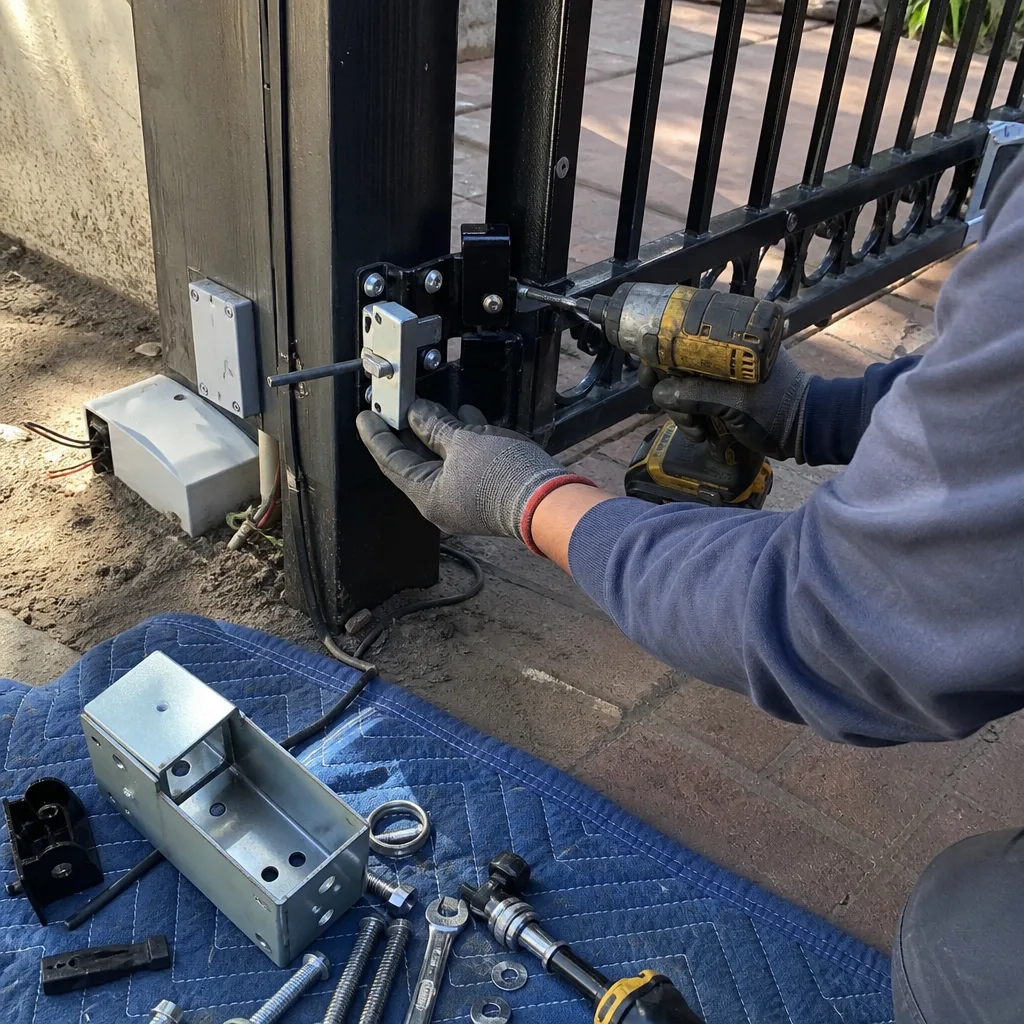
UL 325 is a safety standard from Underwriters Laboratories that governs automatic gate operators. It is not a building code, but California has adopted it into its code as a referenced standard, which means a Santa Ana building inspector can and does enforce it. The standard’s core obsession is entrapment protection: the gate must stop and reverse when something or someone occupies its path.
When an inspector arrives for a permitted gate or operator installation in Santa Ana, here is the checklist they work from. This is what the inspection actually looks like:
- Entrapment protection devices present and wired correctly. The inspector looks for the two required means of protection. On most systems, those are a photo-eye or contact edge on each side of the gate’s travel, plus an inherent safety (like a clutched operator that reverses on resistance). The inspector will trip each device and watch the gate respond.
- Force setting verified. The operator’s force limit has to be set low enough that the gate reverses before it can pin a person. Inspectors in Orange County frequently ask the technician to demonstrate the reversal twice, from both the open and close directions.
- Electrical connection and grounding. The inspector opens the junction box or operator enclosure and checks that the circuit is properly grounded, the wire gauge matches the operator’s nameplate, and the disconnect means is present. If the work was done without a permit in the past, this is often where it shows: undersized wire, no ground, or a splice buried in conduit.
- Warning signage. UL 325 requires warning signs on both sides of an automatic gate. It sounds trivial, but it is one of the most common inspection failures we see in Santa Ana. The signs are specific: they have to identify the gate as automatic and warn against playing on or around it.
- Alarm or audio alert if required. For certain gate classes, the operator must sound an alarm before moving. This is more common on commercial gates than residential, and the inspector’s checklist applies it accordingly.
One thing that surprises homeowners: the inspector is not checking whether the gate looks straight, whether the paint matches, or whether the hinges will last ten years. The permit inspection is a life-safety and electrical inspection. Cosmetic condition is a private contract matter between you and your contractor. If you’re working with a company that can’t explain what UL 325 requires, that’s a signal to ask harder questions. Our How to Hire a Gate Repair Contractor in Santa Ana: A Step-by-Step Guide covers what to look for.
We’ve been called out to Santa Ana properties to fix a failing inspection that a previous installer couldn’t pass. In one case on the west side, a Viking operator had been installed with a force setting that could have pushed a parked car. The gate would hit resistance and keep pressing. The inspector flagged it immediately. We reset the force curve, repositioned the photo-eyes, and photographed the new settings before the reinspection. Passed on the second trip.
HOA Approval vs. City Permit: Two Separate Tracks
If you live in a community governed by a homeowners association in Santa Ana or the surrounding Orange County suburbs, you have two approvals to think about, and they don’t talk to each other. The city does not check with the HOA. The HOA does not check with the city. Missing either one causes a different kind of problem.
The city’s concern is safety and code compliance: entrapment protection, electrical, structural stability, setback compliance. The HOA’s concern is architectural uniformity: gate height, material, color, style, and whether the gate matches the community’s design standards. These are legally separate regimes.
The order of operations matters, and most homeowners do it backwards. Here’s the sequence we recommend:
- Get HOA architectural approval first. If the HOA rejects a design, you don’t want to have already paid for city permit drawings of that same design. HOA review boards in Orange County can take 30 to 60 days. Start there.
- Then pull the city permit, if one is required. Once the design is locked, the permit drawings match what will actually be built.
- Coordinate the inspection schedule. Santa Ana inspections run on a scheduling system that can book several days out. Your contractor should handle this, but you should see the schedule in writing.
We’ve watched homeowners in Tustin and Irvine HOAs pay for a custom gate design, submit it for city permit, and then have the HOA reject the style because it didn’t match the community’s published material palette. Now the design changes, the permit drawings change, and the clock starts over. Getting the HOA sign-off first costs nothing extra and avoids the redesign bill.
One more point on HOAs: an HOA’s architectural approval is not a substitute for a city permit, and a city permit does not satisfy an HOA’s design review. They’re checking different things, and neither body considers the other’s sign-off relevant to its own jurisdiction.
Unpermitted Gates and the Title Report at Escrow
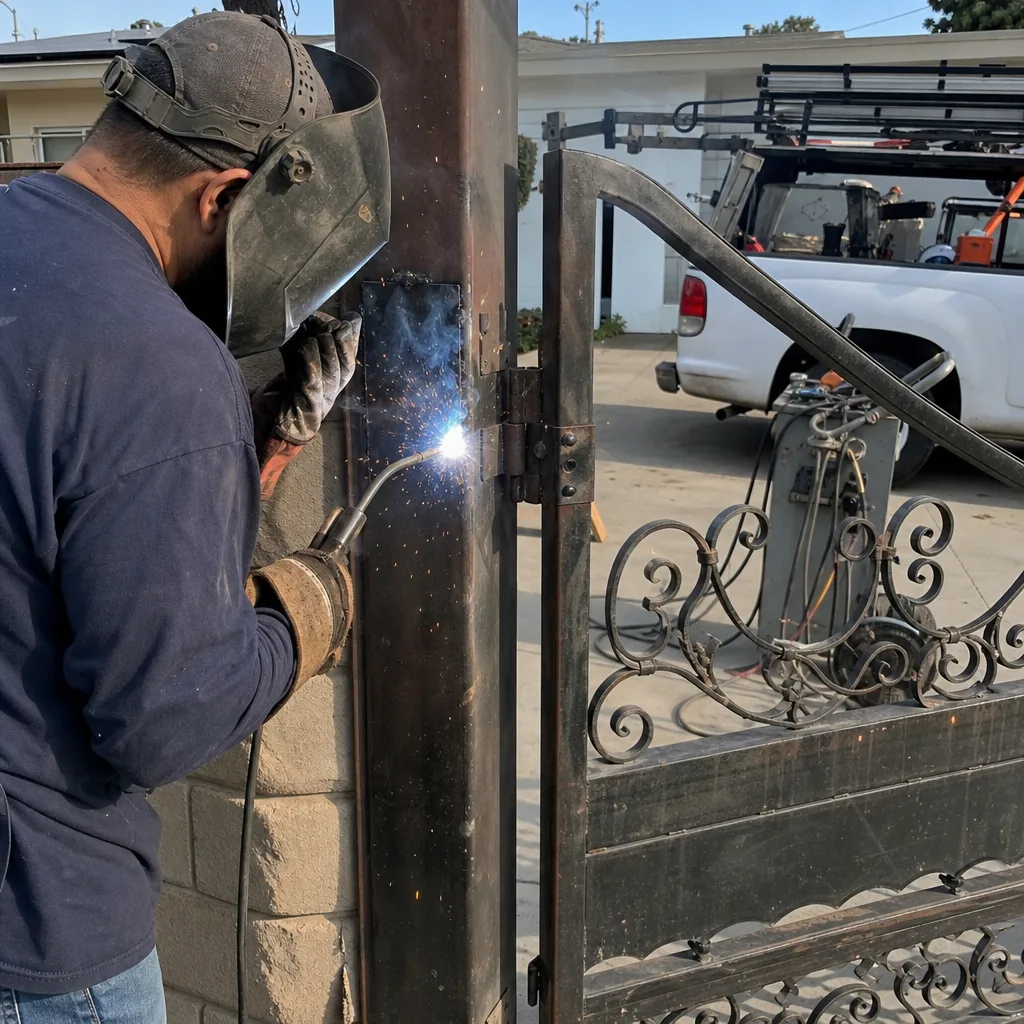
Here is where the permit question stops being theoretical. When you sell a home in California, the buyer’s title company and the buyer’s inspectors look for unpermitted work. An automatic gate is one of the items that draw attention because it’s visible, it attaches to the property, and it involves electrical work.
How an unpermitted gate installation shows up at escrow:
- The buyer’s home inspector flags the gate as non-conforming. If the operator installation shows no permit record and the wiring enters the ground or the wall, a competent inspector will note it. The buyer then asks the seller to cure it.
- The title report may not directly list a gate, but the city’s building records are often pulled as part of due diligence. When the property’s permit history shows no record for the gate that’s physically sitting on the driveway, that’s a discrepancy the buyer’s agent will raise.
- Resolving it at escrow usually means one of three things: the seller pulls a permit retroactively and gets the installation inspected (which may require redoing wiring that fails), the seller offers a credit so the buyer assumes the risk, or the deal gets delayed while both sides argue about whose problem it is.
- The retroactive permit is often more expensive than the original permit would have been. The city may require plans drawn for the existing installation, plus an inspection that could fail and force electrical corrections. What would have been a $200 permit becomes a $2,000 escrow line item.
A gate is visible from the street. You can’t hide the fact that it exists. And in Santa Ana, where a large share of the housing stock is pre-1970 and many properties have been improved multiple times over the decades, permit records are already messy. An automatic gate is just one more item on the buyer’s due-diligence list. Making it clean at the time of installation is cheap insurance compared to defending it at escrow.
We’ve had Santa Ana sellers call us after the escrow problem surfaced, asking us to “retrofit the paperwork.” What they usually need is for us to inspect the existing operator, bring the entrapment protection and wiring into compliance, and document what was done so the city’s inspector can sign off. It’s fixable. It’s also avoidable.
How to Verify a Contractor Pulled the Permit in Your Name
A gate contractor can pull a permit in their name, in the property owner’s name, or not at all. The distinction matters more than most homeowners realize.
When a contractor pulls a permit in their own name, they become the “permit holder of record.” That’s fine while the work is current, but it creates friction later: if you sell the house, the city’s permit record shows the contractor’s name, not yours. If there’s ever a question about the installation, you have to prove the work was done at your property through invoices and the contractor’s records. If that contractor is out of business, you’re assembling a paper trail alone.
When the permit is in the property owner’s name, the permit record attaches to the address permanently. That’s the cleaner setup for a homeowner, and it’s what we recommend on any Santa Ana residential gate project that crosses the permit threshold.
Here’s how to verify it was actually done:
- Ask for the permit number before work starts. Not after. If the contractor says the permit is coming, wait until you have the number. Santa Ana’s Building Division issues permits with a record number that you can look up.
- Confirm whose name is on the permit. If it’s the contractor’s name and you’re a homeowner, ask for it to be in yours. Most contractors will do this if asked before the permit is issued.
- Check the Santa Ana Building Division’s online permit portal. Enter the address and look for the permit. If it’s not there, the permit either wasn’t pulled or hasn’t been recorded yet. Don’t accept “it’s in process” without a number.
- Get the final inspection sign-off in writing. A permit that’s pulled but never final-inspected is almost as bad as no permit at all. The permit record will show the inspection status. It needs to read “finaled.”
- If a contractor tells you “permits aren’t required for this job,” ask them to explain why, in writing. There are legitimate cases where that’s true. But a contractor who can’t articulate the maintenance-versus-alteration distinction in a single sentence is probably guessing. A written explanation protects you and tests their actual knowledge.
What it means when a contractor says permits “aren’t required for this job” without explaining why: one of three things is happening. They’re right and they just don’t know how to explain it. They’re wrong and they don’t want the delay. Or they’re pushing you toward an unpermitted installation because their work wouldn’t pass an inspection. The first is a communication problem. The other two are reasons to find a different contractor.
Santa Ana-Specific Codes, Climate, and Gate Construction Notes
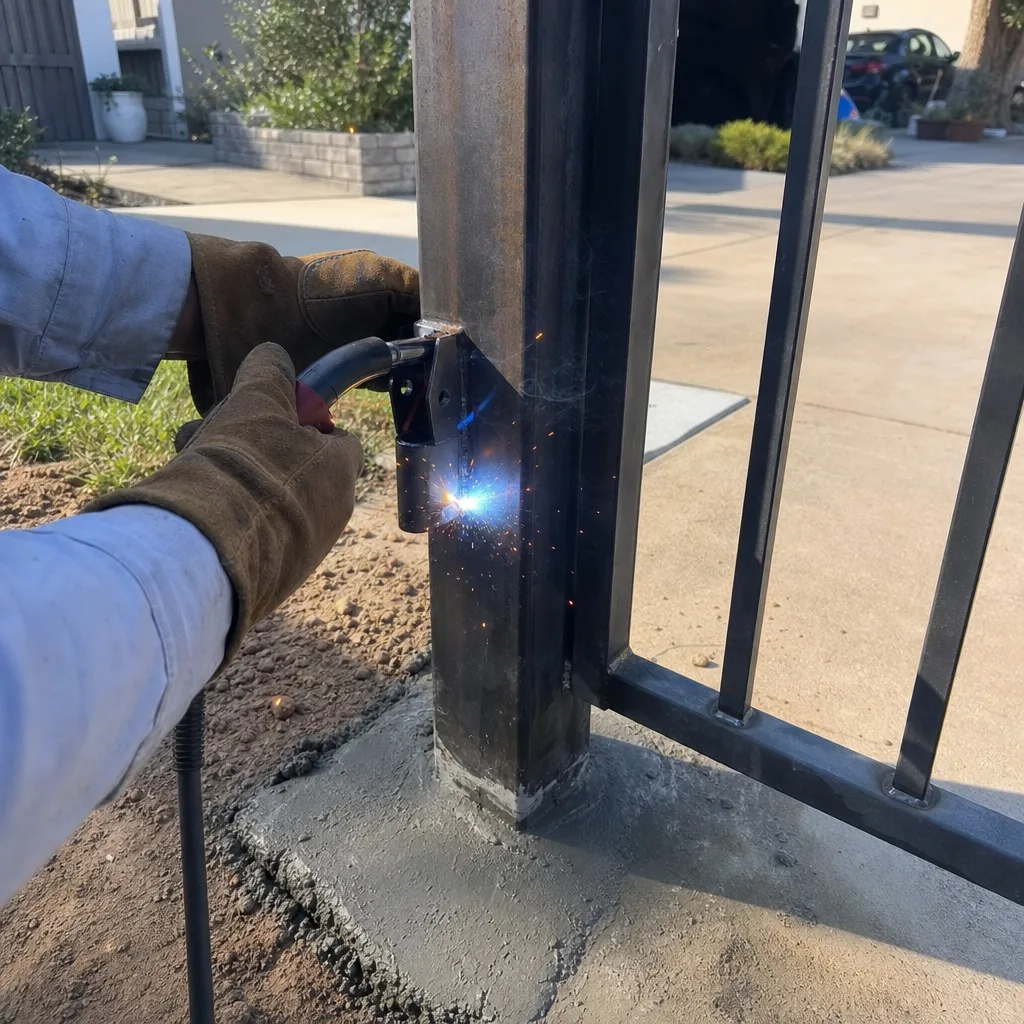
Santa Ana sits ten miles from the coast, which means the climate is dry most of the year but not gentle on gate hardware. The city’s combination of Santa Ana winds, a long dry season that lets dust settle into every hinge and track, and an older building stock with tight lots creates a specific set of gate problems. These factors also interact with the permit and inspection picture.
Wind Load and Gate Design
A solid-panel gate in Santa Ana catches the Santa Ana winds like a sail. The city’s Building Division, like every jurisdiction in Orange County, applies the CBC’s wind load provisions to gate structures. A solid gate on a corner lot in the Washington Square area or along any of the north-south arterials has to be built to stay put in a 90-mph gust. That’s not a permit consideration for routine hinge replacement, but it becomes one when you’re replacing a gate structure. The new gate’s footings, post embedment, and bracing all get reviewed as part of the permit drawings.
This is also the point where a cheap gate becomes an inspection problem. A lightweight aluminum frame panel that’s not braced for the local wind zone will fail the structural review, and redoing the design after fabrication is expensive. We tell Santa Ana customers to size for the wind, not for the look.
Older Electrical Services
As mentioned above, Santa Ana’s pre-1960 housing stock is full of electrical panels that were sized for a different era. A modern gate operator on a dedicated circuit is not a huge load, but it needs a grounded, properly sized branch circuit and a means of disconnect accessible at the operator. On many older Santa Ana panels, there is no spare breaker slot and the grounding is suspect. When that’s the case, the operator installation triggers an electrical upgrade, and that upgrade crosses the permit threshold even if the gate swap itself would not have.
We’ve approached this on Floral Park and Park Santiago properties more times than we can count. The conversation usually starts with a gate operator and ends with a subpanel. Not always, but often enough that we flag it during the estimate rather than discovering it mid-job.
Local Soil and Post Setbacks
Santa Ana’s soil varies from sandy loam in some neighborhoods to heavier clay in others. Gate posts carry all the gate’s dynamic load, and a post that is set shallow in loose soil will lean within a few seasons. The CBC’s foundation provisions for gates require posts to be set below the frost line and, in many Santa Ana soil conditions, into a concrete footing sized for the gate’s weight and swing force. If you’re replacing a leaning gate post and the repair means setting a new footing, that’s a structural alteration, not a maintenance call. The permit requirement follows.
This is another Santa Ana-specific reality: the city’s inspection staff sees a lot of gate post failures, and they’ve developed a sharp eye for undersized footings. A contractor who says “we’ll just set the post in some concrete and call it done” is setting up a future inspection failure on a permitted job.
What Permits and Inspections Cost in Orange County
Permit fees vary by city, and Santa Ana’s fee schedule is published through the Building Division. For gate work that crosses the permit threshold, here’s the range you should expect in the Santa Ana and Orange County market:
| Permit or Service | Typical Cost Range (Santa Ana / Orange County) |
|---|---|
| Simple electrical permit for an operator replacement (residential) | $180 - $320 |
| Building permit for a new gate structure (residential) | $250 - $600, depending on valuation |
| Commercial gate operator permit | $400 - $900, depending on project valuation and plan check |
| Plan-check fee increment (when required) | Often 65% of the permit fee, added on top |
| Reinspection fee (if the first inspection fails) | $100 - $200 per trip in most Orange County cities |
These figures are ranges based on current fee schedules and what we see on the invoices from recent Santa Ana gate permits. Your exact fee will depend on the project valuation your contractor reports and whether plans are required. The fee is small compared to the escrow problem it prevents.
One cost note on repairs that do not need a permit: a swing gate motor replacement on a BFT or FAAC operator in Santa Ana typically runs $500 to $900 in parts and labor, and it’s a maintenance item with no permit involved, as long as the electrical circuit stays untouched. The permit question only opens up when the work changes the circuit or the structure.
Before any work starts, our written price goes in front of the customer. The permit fee is a separate line item if the job requires one, and we tell you that on paper, not verbally. That’s Clause 1 of the Haven Standard: have it in writing. Every Santa Ana customer gets the same treatment, whether the job is a hinge replacement or a full operator swap with a city inspection.
Common Mistakes to Avoid
- Assuming all gate work is maintenance. A hinge swap is maintenance. A new operator on a new circuit is an alteration. The homeowner who doesn’t know the difference is the homeowner paying for a retroactive permit at escrow.
- Getting the city permit before the HOA approval. If the HOA rejects the design, the city permit drawings have to be redone. The HOA review takes longer anyway. Start with the HOA, then pull the permit.
- Accepting “we’ll take care of the permit” without a permit number. Get the number, check the portal, verify the name on the permit. Contractors who pull permits in their own name and disappear leave the homeowner holding a paper trail with no signature.
- Treating the permit inspection as optional. A pulled permit that never gets final-inspected is an open record. At sale, the buyer’s agent sees an open permit and asks why. Close the record.
- Ignoring the UL 325 entrapment requirements. The inspector will not sign off, and the liability exposure persists. Two means of entrapment protection, force settings demonstrated, warning signs. This is not a suggestion.
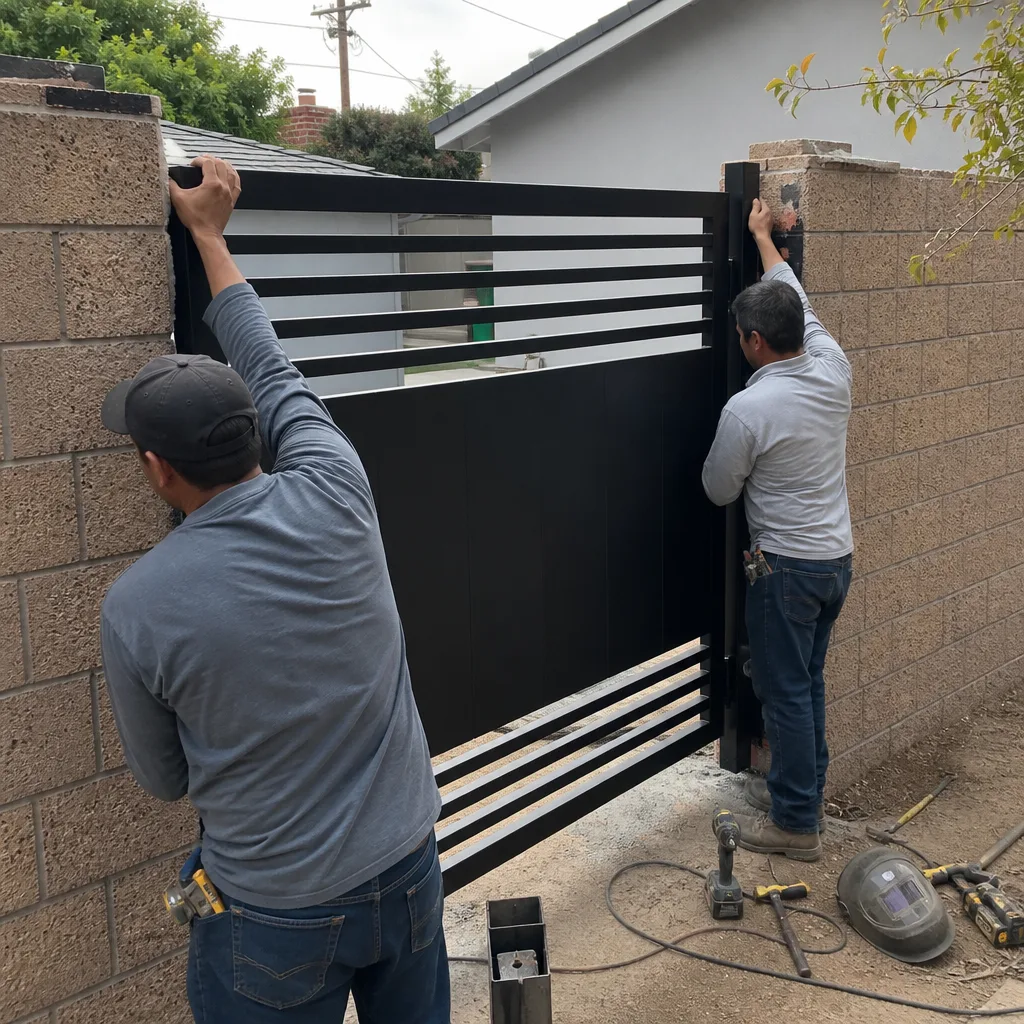
- Hiring a welder who is not a gate contractor. A good welder can fix a cracked frame. A good welder can also produce a gate that doesn’t meet Santa Ana’s wind load or footing requirements. If the work crosses into structural territory, use a contractor who understands the permit picture.
- Assuming commercial and residential rules are the same. They aren’t. Commercial gate work in Santa Ana has stricter permit triggers and fewer exceptions. If the property is income-producing, the operator replacement is almost always a permit job.
When to Call a Professional
Any time the gate work moves from maintenance to alteration, call someone who can tell you which side of the line you’re on before any tool comes out. Our Gate Repair services include permit guidance on every job. That means a new operator with electrical, a gate structure replacement, any commercial gate change, or any repair where you’re unsure whether the original installation was permitted. A competent gate contractor will give you the permit answer in writing, not as a verbal shrug.
You should also call a professional when an existing gate shows entrapment symptoms: it reverses late, it doesn’t stop when something crosses the beam, or the force setting feels too strong. Those are UL 325 failures, and an inspector would flag them instantly. Gate Repair in Santa Ana is the service we run for exactly this. Vance Gate Repair Santa Ana offers free estimates in Santa Ana, call (657) 286-4793, and a live person answers at any hour. Our written price goes in your hand before anything gets taken apart.
Frequently Asked Questions
Most gate repairs in Santa Ana do not require a permit because they qualify as routine maintenance, such as hinge replacement, photo-eye swaps on existing wiring, or circuit board replacement inside an existing operator. For more guides & resources on gate maintenance and compliance, visit our blog. You do need a permit when the work is an alteration or new installation: a new gate structure, a heavier gate replacement, a new operator on a new circuit, or most commercial gate changes. Call (657) 286-4793 and we’ll tell you which category your repair falls into before any work is scheduled.
A residential electrical permit for a gate operator replacement in Orange County typically runs $180 to $320, while a residential building permit for a new gate structure runs $250 to $600 depending on the project valuation. Commercial gate permits run higher. The fee is a small line item compared to the cost of resolving an unpermitted installation at escrow. Call (657) 286-4793 for an exact breakdown on your specific job, estimates are free.
UL 325 is the safety standard that governs automatic gate operators, requiring entrapment protection so the gate stops and reverses before it can injure a person or damage a vehicle. California building codes reference UL 325, which is why a Santa Ana inspector checks for working photo-eyes or contact edges, proper force settings, warning signs, and correct electrical grounding at the operator. A gate that passes the structural review but fails the UL 325 check will not get a final inspection sign-off. Call (657) 286-4793 for a written assessment if your gate is coming up on an inspection.
Yes, Santa Ana and most Orange County cities will accept a retroactive permit application for existing work, but it’s more expensive and more likely to fail than pulling the permit before installation. The inspector will review the installation as it currently sits, and any wiring, footing, or entrapment-protection deficiencies have to be corrected before the permit finales. If you’re buying or selling a home with an unpermitted gate, call (657) 286-4793 and we’ll give you a straight read on what’s involved in bringing it into compliance.
If the operator is being replaced on the same circuit with the same electrical footprint, it generally qualifies as maintenance and needs no permit, regardless of whether the brand is Linear, Viking, or any other. The brand of the operator doesn’t change the permit question; the electrical and structural footprint does. When we replace a Viking or Linear operator in Santa Ana, we tell you in writing whether your specific swap stays on the maintenance side of the line. Call (657) 286-4793 for that written answer.
A Santa Ana gate permit inspection checks entrapment protection (photo-eyes, contact edges, force settings), the electrical connection (wire gauge, grounding, disconnect), warning signage, and the structural adequacy of any new gate or posts. The inspector is not checking paint, alignment aesthetics, or hinge longevity. Those are contract matters. We photograph every setting and every adjustment before the inspector arrives, so you know exactly what the inspector will see. Call (657) 286-4793 to schedule a pre-inspection review.
The Bottom Line
Most gate repairs in Santa Ana need no permit. The exceptions, when they arrive, are specific and expensive to ignore: new electrical work, structural changes, and commercial replacements all cross the line. When a permit is required, the inspection is a UL 325 and electrical review, not a cosmetic one. HOA approval and city permits are separate tracks, and the order matters. And at escrow, an unpermitted gate is a visible, documented problem that costs more to fix than the permit ever would have. Get the answer in writing before the work starts. Vance Gate Repair Santa Ana home is here for the permit question, the repair, or the install, Gate Installation in Santa Ana and Gate Motor & Opener in Santa Ana all work from the same written-price standard.
Written by Adrian Vance, Owner at Vance Gate Repair Santa Ana, serving Santa Ana since 2014.