
Last updated September 20, 2026
Free on-site gate assessment - hinges, posts, and your LiftMaster or Nice gate operator checked before anything is quoted
The assessment is free and the quote is the invoice.

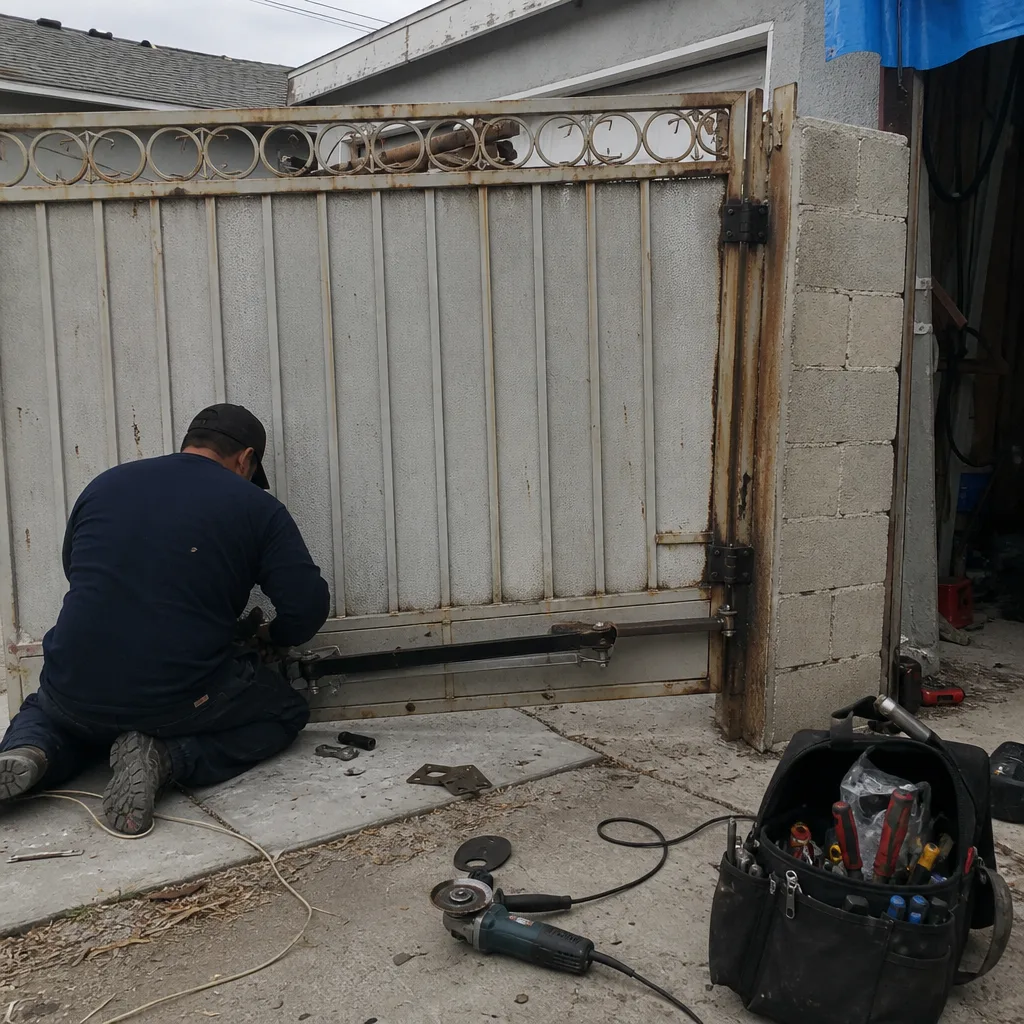 Before
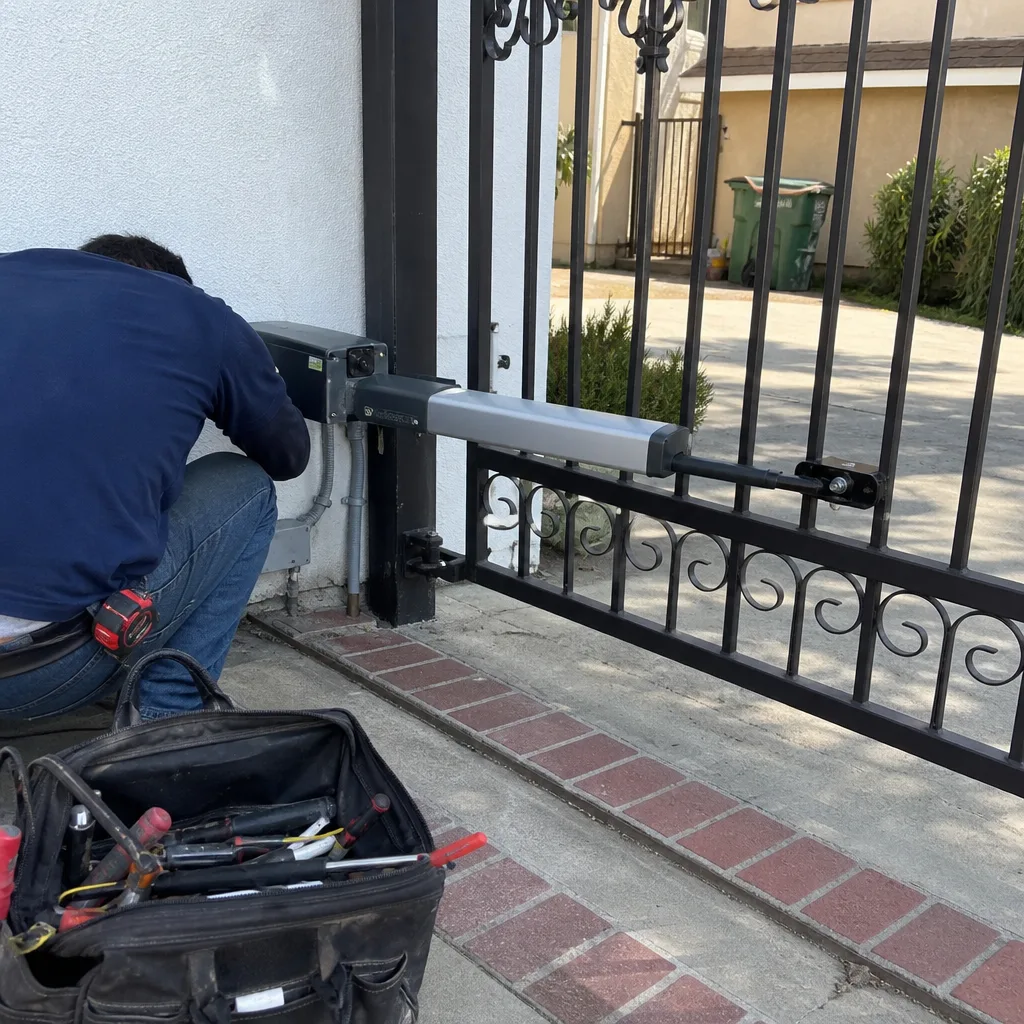 After
After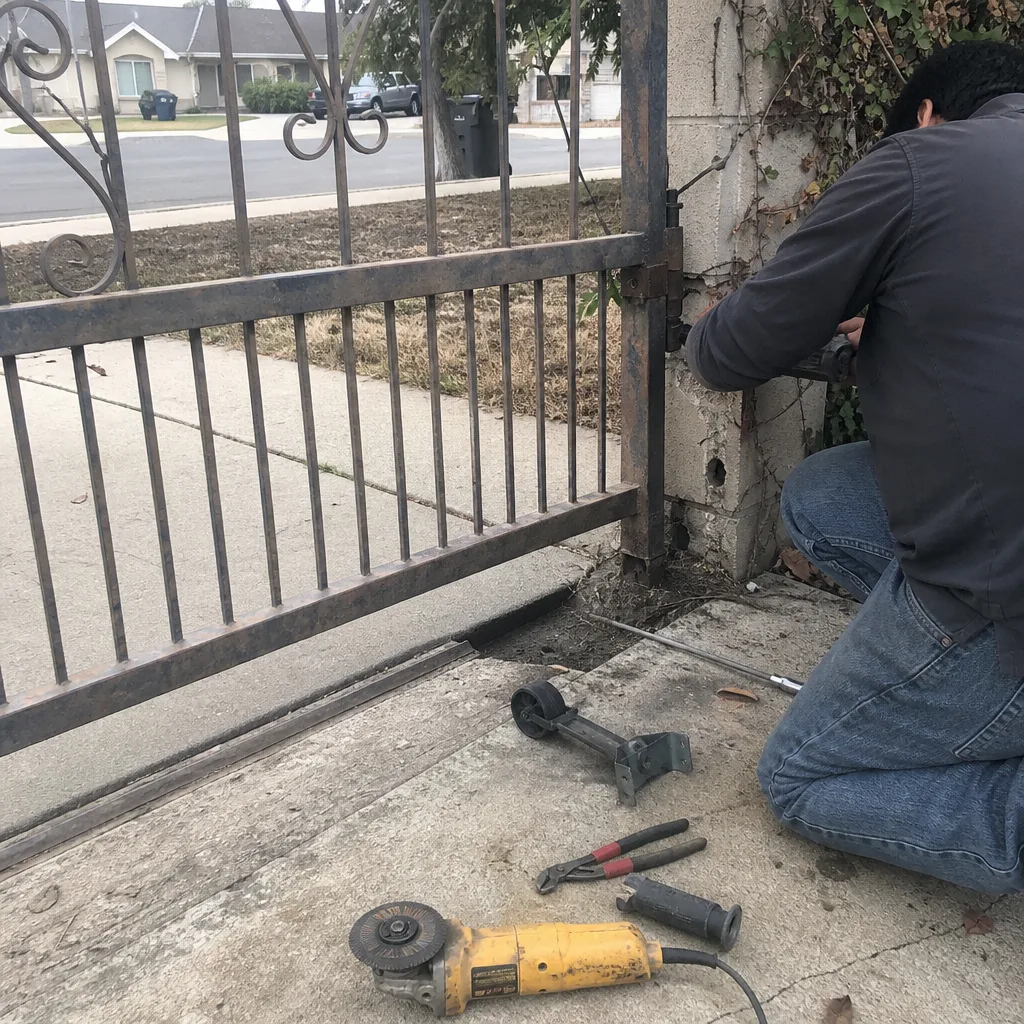 Before
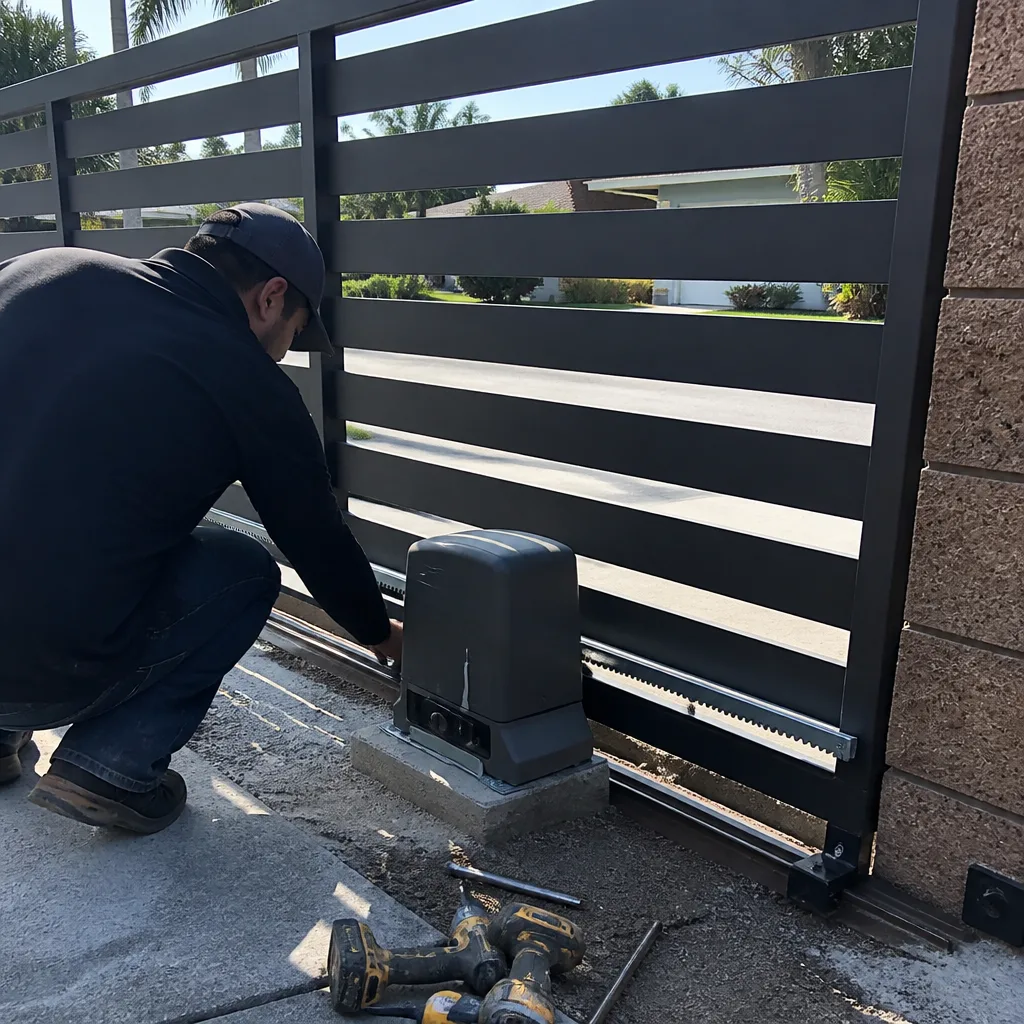 After
After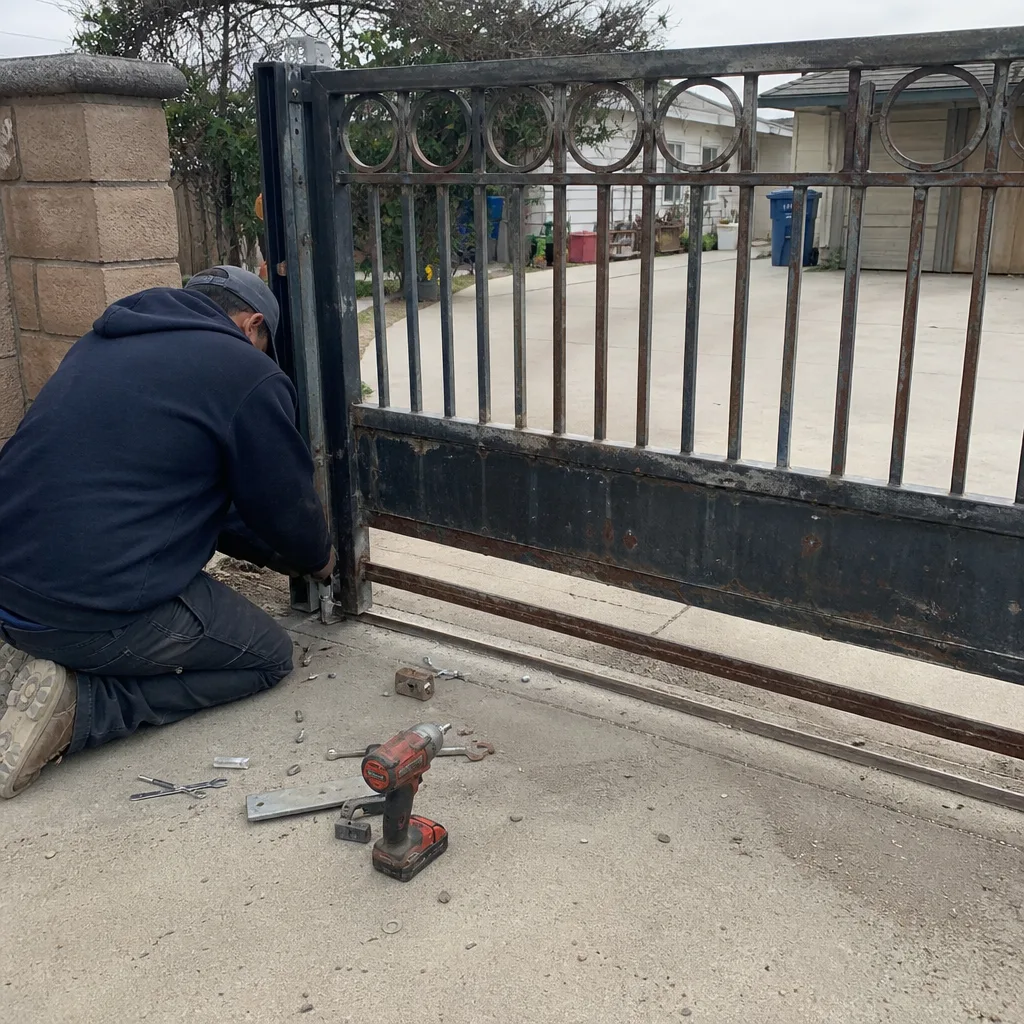 Before
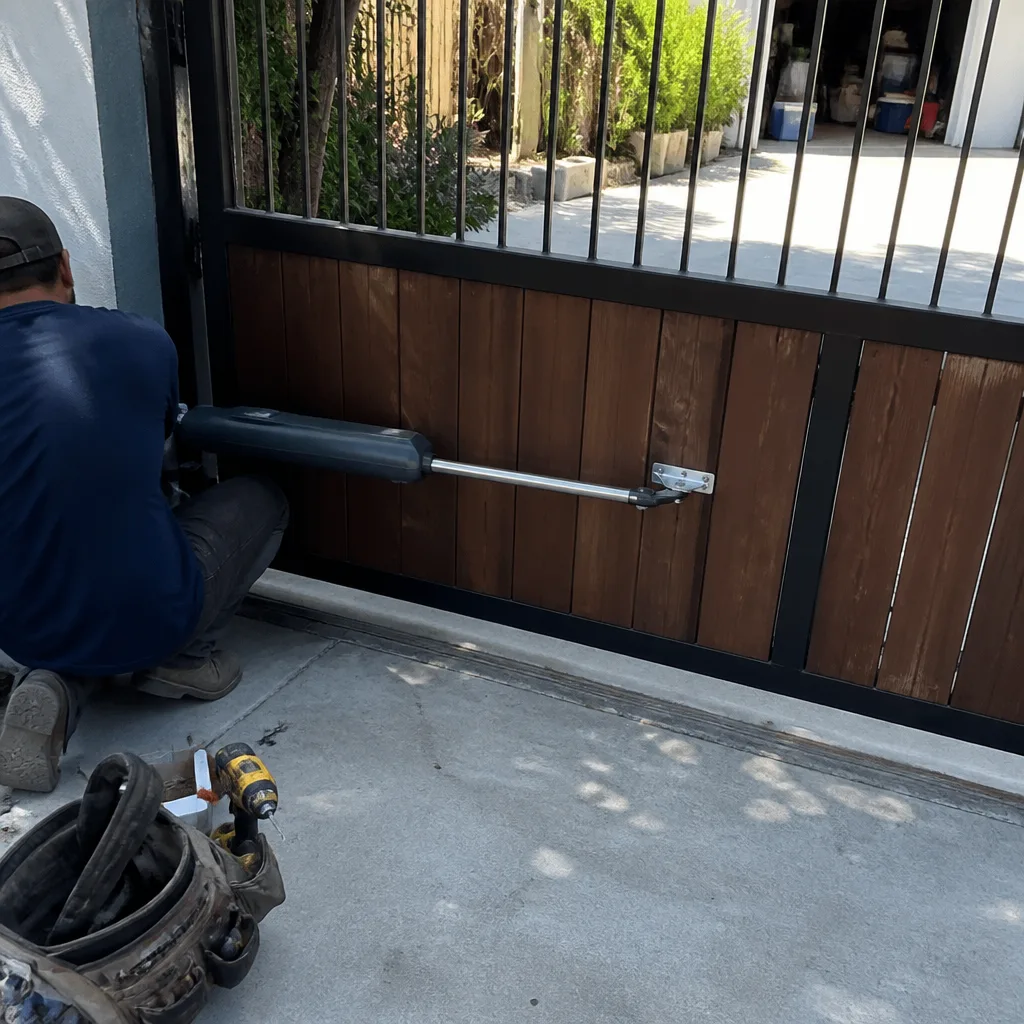 After
AfterSeasonal Gate Repair Care for Santa Ana: Year-Round Homeowner’s Guide
October in Santa Ana is harder on gate hardware than January. The Diablo wind events drop relative humidity below 10%, crack neoprene seals that were fine in August, and the thermal cycling between 95°F afternoons and 55°F nights shifts metal post collars enough to throw limit switches out of calibration. You’ll learn how to map four distinct stress cycles to four specific component checks, so nothing on your gate fails by surprise. This is the maintenance calendar we use on every driveway in Santa Ana, from Floral Park to West Floral Park and everywhere between.
Quick Answer
Seasonal gate care in Santa Ana means four targeted inspections per year, not two generic ones: seal and fastener checks during the October-to-December wind season, control-board inspection during June Gloom condensation, UV and paint assessment in peak summer, and a footing-and-conduit walkthrough after any meaningful rain. Most homeowners miss the wind-season limit-switch drift, which is the single most common cause of a gate that stops mid-travel or reverses for no apparent reason in Santa Ana.
Table of Contents
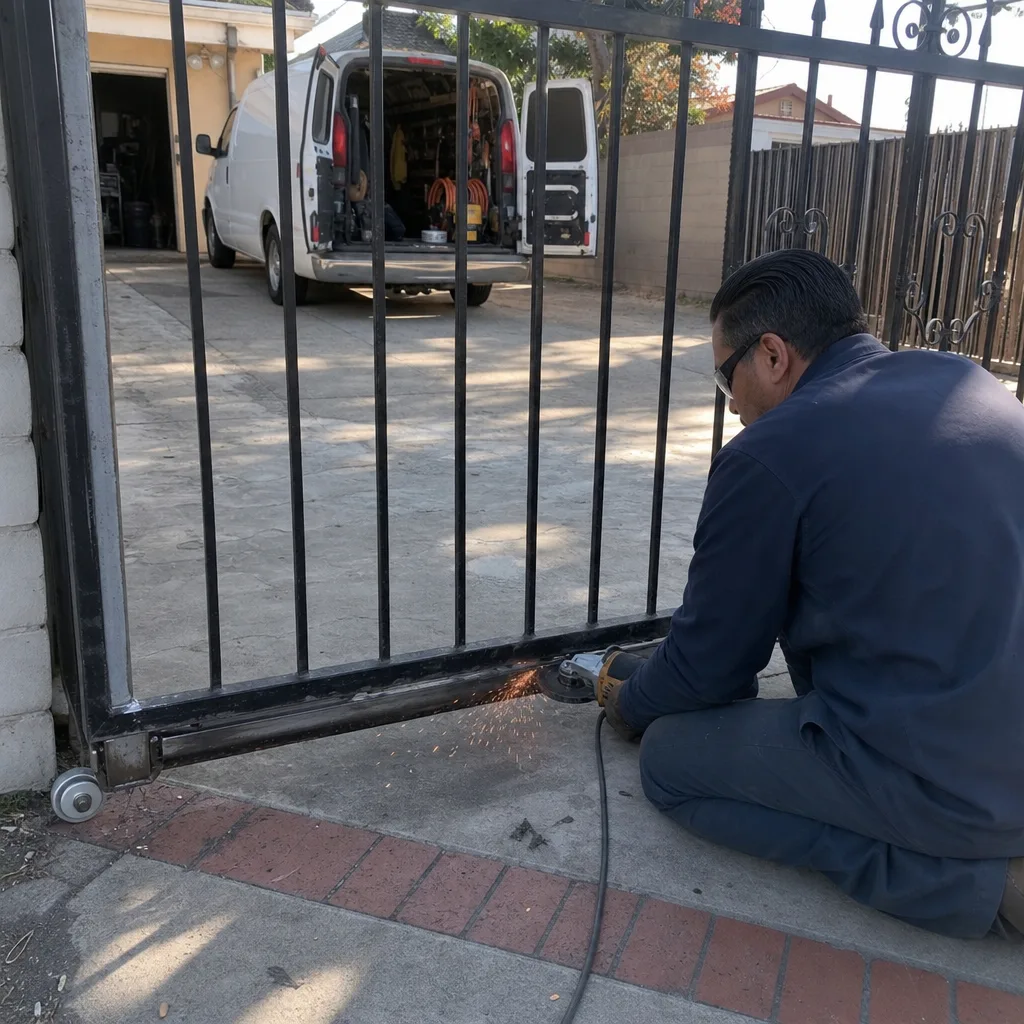
- The Santa Ana Wind Season (October-December): The Stress Cycle Most Homeowners Miss
- June Gloom and Gate Electronics: Condensation You Can’t See
- Summer UV Load: Powder-Coated Aluminum vs. Painted Steel in Direct Sun
- The Post-Rain Inspection: Rare but Consequential
- A 12-Month Gate Service Calendar for Santa Ana
- What to Check Yourself vs. What to Leave to a Technician
- Common Mistakes to Avoid
- When to Call a Professional
- Frequently Asked Questions
BeforeAfterThe Santa Ana Wind Season (October-December): The Stress Cycle Most Homeowners Miss
Santa Ana doesn’t have four seasons in the traditional sense, but it does have four distinct stress cycles for gate hardware. The one that damages the most gates starts in October, when Diablo winds howl through the passes and relative humidity crashes into single digits. Here’s what’s actually happening to your gate during those events, and what to do about it.
First, the wind itself loads your gate like a sail. A solid steel or aluminum gate panel catching a 40 mph gust generates hundreds of pounds of lateral force that transfers directly into the hinge posts and the gate operator’s arm bracket. We’ve measured post-top deflection on windward gates in Santa Ana that shifts the entire gate leaf by a quarter inch during sustained gusts. That movement isn’t just noisy. It works the limit switches inside the operator, which are set to precise travel positions. When the gate physically shifts, the switch setting no longer matches reality, and you get a gate that stops short, over-travels, or reverses halfway through the cycle.
Second, the humidity crash. Neoprene seals around the operator housing, photo-eye lenses, and control board enclosures hold up fine at 40% humidity. At 8%, they dry out, shrink, and crack. Once a seal cracks, the next fog event or irrigation overspray introduces moisture directly onto a circuit board that was designed to stay dry. In our experience, October is when we see the highest number of seal-related failures on LiftMaster and FAAC operators in Santa Ana, simply because the dry air prepared the seal to fail.
The Wind-Season Checklist
Run through these five items every October, and again after any Santa Ana wind event that lasted more than 24 hours:
- Check every fastener on the gate leaf and hinge posts. Wind vibration loosens bolts over time, especially on the top hinge where the cantilever load is highest. Use a torque wrench and the manufacturer’s spec. If you don’t know the spec, a technician can look it up by gate weight and hinge type in under five minutes.
- Inspect neoprene seals on the operator housing and control board enclosure. Run a finger along each seal. If it feels hard, brittle, or leaves black residue on your skin, it’s dry-rotted and needs replacement before moisture gets through.
- Confirm the limit-switch calibration. Cycle the gate fully open and fully closed. In the closed position, the gate should seat evenly with matching gaps on top and bottom. If it doesn’t, the switch has drifted. This one checks catches more problems than any other single step.
- Check the photo-eye alignment. Wind-shifted posts or a loose mounting bracket can knock the infrared beam out of alignment by a few degrees, which is enough for the gate to refuse to close. Look for the alignment indicator light. If it’s blinking, the beam is broken or misaligned.
- Lubricate the hinge pins and the operator drive mechanism. Use a dry lithium spray or manufacturer-recommended lubricant. Never use WD-40 on gate hinges. It’s a solvent, not a lubricant, and it will strip the existing grease and leave bare metal against bare metal.
One more thing specific to Santa Ana: the wind season is also when gates that were installed without proper wind bracing show their weakness. If your gate panel has a visible deflection of more than an inch at the free edge during a gust, the panel needs reinforcement, not just a new hinge. A properly braced gate should move less than half that.
For the full picture on how wind damage interacts with mechanical failures, see our Gate Repair in Santa Ana page, where we break down the most common wind-related repair jobs we see in this city every fall.
June Gloom and Gate Electronics: Condensation You Can’t See
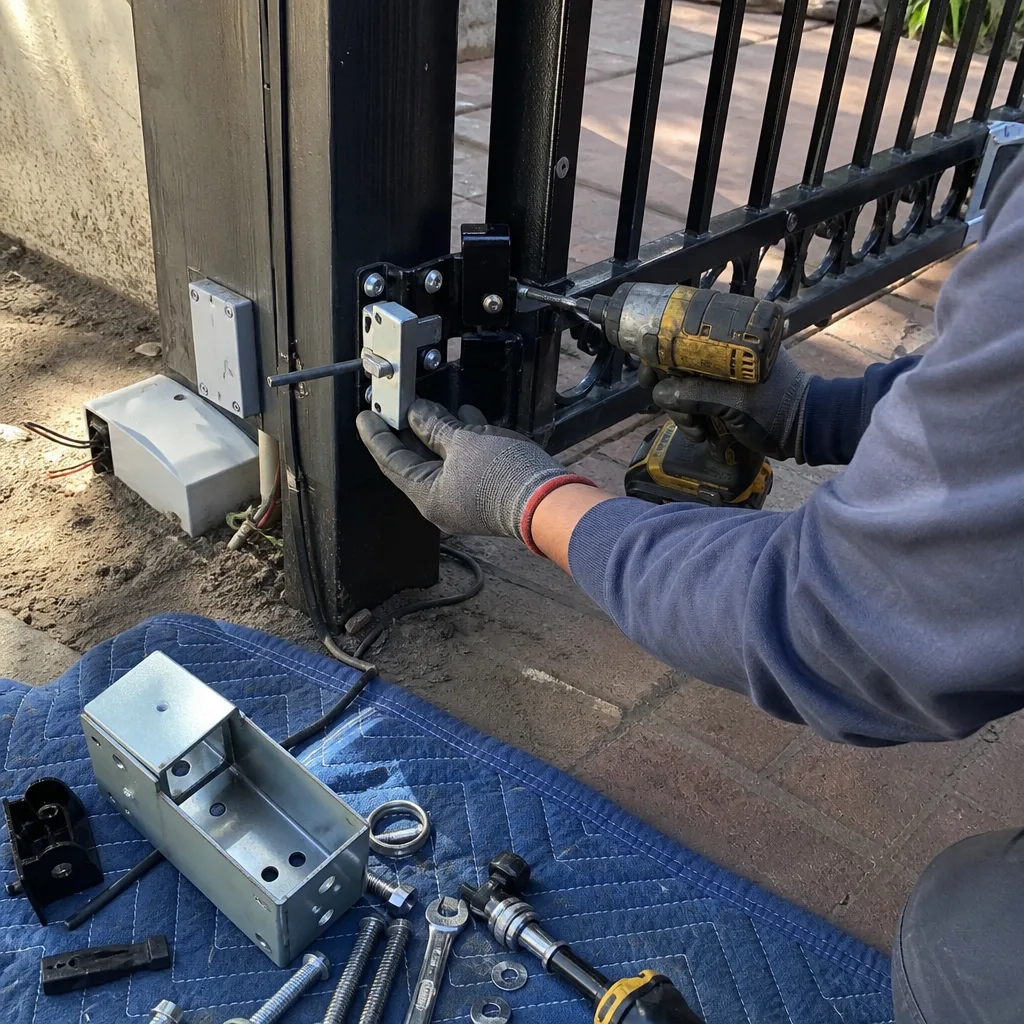
May and June in Santa Ana bring overcast mornings, marine layer moisture, and a specific failure pattern on gate control boards that most homeowners never connect to the weather. The air isn’t cold enough to condense on glass, but it’s damp enough to condense inside an enclosure that warms up during the day and cools overnight.
Here’s the mechanism. During June Gloom, overnight temperatures drop into the high 50s while daytime highs climb back into the 70s and 80s. That daily thermal cycle creates condensation inside any enclosure that isn’t perfectly sealed, the same way a cold drink sweats on a humid day. The control board inside your gate operator sits in a metal or plastic housing that breathes through a small vent. When humid marine air gets in and the housing cools, water collects on the board. When the board powers up the next morning, that moisture shorts traces, corrodes solder joints, and causes intermittent failures that are maddening to diagnose because they disappear by afternoon.
Sensors are the other victim. Photo-eyes mounted low on the gate posts sit directly in the damp marine layer, and the lens housings are rarely sealed as well as the main operator. Moisture on the lens diffuses the infrared beam, which the controller reads as an obstruction. The gate refuses to close, or closes halfway and reverses, even though nothing is in the path.
What to Check During Late Spring
- Open the operator housing on a dry afternoon and look for corrosion. Green or white residue on any circuit board trace or connector pin means moisture has been getting in. Do not touch the board with your bare hands. Static discharge from a finger can destroy a control board instantly. If you see corrosion, the board needs professional cleaning or replacement.
- Inspect the housing seal and the cable-entry points. Conduit connections and cable glands are the most common moisture entry point, especially on gates installed more than five years ago. The rubber grommets shrink, and the gap opens up. A $12 grommet replacement prevents a $400 control board failure.
- Wipe the photo-eye lenses with a dry microfiber cloth. Do this every two weeks during May and June. The condensation and salt-moisture film that builds up on the lens is exactly what causes phantom obstruction errors.
- Watch for intermittent symptoms. A gate that works fine in the afternoon but malfunctions in the morning is the classic June Gloom signature. Don’t ignore it and hope it goes away. The moisture that causes morning failures is also corroding the board, and it will eventually cause a permanent failure.
Salt-moisture intrusion peaks in late spring here because the marine layer carries a fine saline mist that settles on everything near the coast and in low-lying inland pockets, including most of Santa Ana. It’s not enough to see, but it’s enough to accelerate corrosion on any exposed connector. A $40 annual inspection catches this before it becomes a $600 board replacement.
Summer UV Load: Powder-Coated Aluminum vs. Painted Steel in Direct Sun
Santa Ana gets roughly 280 days of sun a year, and July through September are the months that do the most cumulative damage to gate finishes. The timing matters because UV damage is a slow process, and a gate that looks fine in June can show visible chalking, fading, and micro-cracking by October.
The material matters enormously. Powder-coated aluminum gates hold up substantially better than painted steel in Santa Ana’s direct sun, and the difference is visible by year five. Powder coating is a thermoset polymer baked onto the metal at 400°F, which cross-links the molecules into a single, continuous film. It resists UV degradation far better than liquid paint, which is a thermoplastic that breaks down under sustained UV exposure and releases pigment as the binder degrades. That’s why a 10-year-old powder-coated aluminum gate in Floral Park still has reasonable color retention, while a painted steel gate of the same age on the same street shows chalky residue when you wipe it with your hand.
The practical check is simple. Run a finger across the gate surface on a dry day. If your finger comes away with colored dust, the finish is chalking. Chalking isn’t cosmetic. It means the protective polymer layer has degraded enough that UV is now reaching the aluminum oxide layer or, worse, the steel substrate. Once steel is exposed, rust follows within one wet season. Once aluminum oxide forms, the gate can’t be repainted without mechanical stripping and re-coating.
The Summer UV Checklist
- Inspect every gate surface for chalking, fading, or micro-cracking. Pay extra attention to the top rail and any horizontal surface that faces the sky. These get hit by direct UV all day long and fail first.
- Check weld joints and sharp edges. Powder coat pulls thin on sharp corners and weld seams. These are the first places to develop rust or oxidation, even on a gate that looks fine everywhere else.
- Wash the gate twice during summer. Use mild dish soap, water, and a soft brush. Do not use a pressure washer. High-pressure water can force moisture past seals and into the operator housing, which creates exactly the kind of electrical problem you don’t want in August.
- Touch up any scratch or chip that exposes bare metal. The repair doesn’t need to be pretty. It needs to seal the metal. A $15 touch-up kit applied in August prevents a $400 rust repair in February.
- Re-wax or re-seal the gate if it has a clear-coat finish. Many high-end aluminum gates in Santa Ana have a clear powder topcoat that should be re-sealed every two to three years, and summer is the best time to do it because the dry heat helps the sealant cure.
If your gate’s finish is beyond touch-up and the substrate is failing, replacement may be the better long-term answer. On our Gate Installation in Santa Ana page, we go through the cost differences between powder-coated aluminum and painted steel, including the five- and ten-year ownership math specific to this climate.
The Post-Rain Inspection: Rare but Consequential
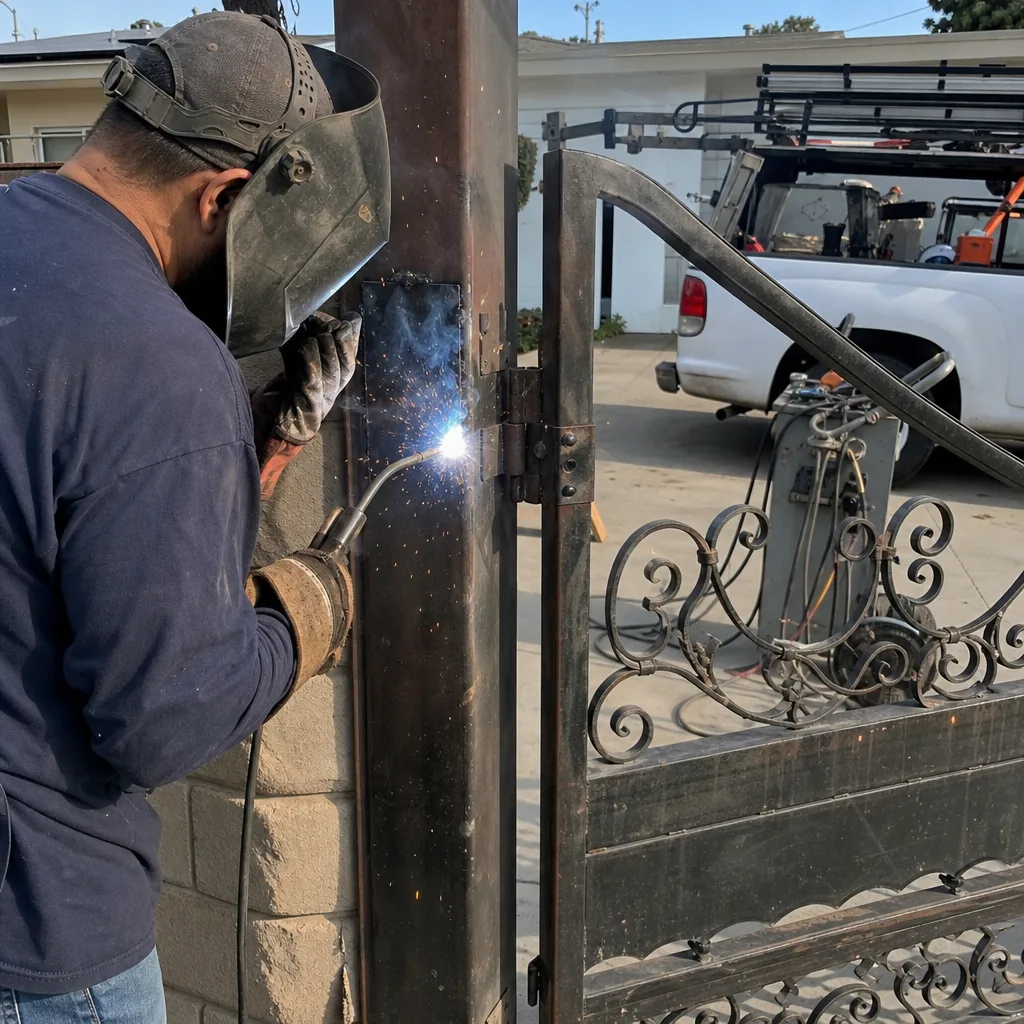
Santa Ana gets maybe 13 inches of rain in a typical year, and most of it falls between December and March. When a real storm moves through, especially after a long dry stretch, it does two things to gate infrastructure that dry weather never does: it saturates the soil around the post footings, and it drives water through any gap in the conduit or enclosure. Both are slow failures that don’t show up for months.
The footing issue is the one that becomes expensive. Gate posts in Santa Ana are typically set in concrete footings that go 36 to 42 inches deep, which is enough for normal soil conditions. But after heavy rain, the soil swells and softens, and a post that was plumb for a decade can shift. The first sign is usually a gate that drags on the latch side or scrapes the ground, followed by a visible lean. The second sign is worse: the post starts rotating in the footing, which puts lateral load on the gate operator arm and causes the motor to work harder than it was designed to. That’s how a minor post shift becomes a motor replacement.
The conduit issue is quieter. Rainwater follows the path of least resistance, and any underground conduit that carries low-voltage wire from the house to the gate operator is a potential water channel. If the conduit has a low point or a cracked joint, water pools in it, and the wire sits in standing water for weeks. The insulation eventually fails, the circuit shorts, and the gate stops responding. We’ve opened conduit boxes in Santa Ana that were literally full of water a month after the last rain.
What to Check After Any Storm Over Half an Inch
- Look at the gap between the gate leaf and the latch post. If the gap is wider at the top than the bottom, or if the gate is dragging on the ground, the post has shifted. Don’t wait. Post-shift repairs are cheaper when caught early.
- Walk the perimeter of each post and look for soil depressions or cracks. Water pooling around the base means the footing is retaining moisture and the surrounding soil has settled. A visible gap between the soil and the concrete collar is a warning sign.
- Open the conduit box or junction box and look inside. If you see standing water or moisture beads, the conduit needs to be drained and resealed. This is a simple fix if done within a week and an expensive wire replacement if ignored for a season.
- Check the operator housing for any sign of water ingress. Look for water stains, fogging inside the cover, or corrosion on the terminals. If the housing got wet, the control board is on borrowed time.
For a deeper look at the kinds of damage we repair after a Santa Ana storm, including post-shift correction and conduit replacement, see our Gate Repair in Santa Ana page.
A 12-Month Gate Service Calendar for Santa Ana
Most “inspect your gate twice a year” advice is worse than no advice at all, because it doesn’t tell you what to look at in which month. A gate that gets inspected in March and September misses the entire wind season, which is when the most consequential damage happens. Here’s a calendar that matches Santa Ana’s actual stress cycles to specific checks, month by month.
The Four-Month Cycle (the one that matters most)
If you only do one inspection per quarter, do these four:
- October (start of wind season): Torque all fasteners, inspect seals, recalibrate limit switches. This is the highest-value inspection of the year.
- February (end of rain season, if any rain fell): Post-footing inspection, conduit inspection, hinge lubrication after any moisture exposure.
- June (peak June Gloom): Control board corrosion check, photo-eye lens cleaning, enclosure seal inspection.
- August (peak UV and heat): Finish inspection, weld-joint check, touch-up painting, clear-coat maintenance.
The Month-by-Month Breakdown
Here’s the full calendar. Month, focus, and the specific component that tends to fail in Santa Ana during that window:
- January: Post-rain inspection if December brought rain. Check footing integrity, conduit dryness, and hinge play. Gate operators with a dipped or sagging leaf should be checked for motor strain.
- February: Final winter rain check. Lube hinges with dry lithium. Inspect the operator’s internal drive belt or chain for tension issues caused by cold-weather contraction.
- March: Spring check: photo-eye alignment, safety reversal test, and a full open-close cycle to verify limit settings. This is the easiest month to catch post-winter drift.
- April: Irrigation season begins. Check that sprinkler heads are not spraying directly onto gate electronics or posts. Overspray is a year-round moisture source that matters most as temperatures climb.
- May: Pre-June Gloom prep. Inspect and replace any dried-out grommets at conduit entry points. This is the best defense against control-board condensation.
- June: Control-board inspection. Remove the housing cover on a dry day and look for corrosion. Check photo-eye lenses every two weeks through the end of the month.
- July: UV inspection. Check finish for chalking or micro-cracks, especially on top rails and sky-facing surfaces. Touch up any bare-metal scratches immediately.
- August: Peak heat check. Gate panels expand in high heat, and the gap tolerances shrink. Listen for scraping or rubbing during operation, which indicates heat expansion issues. Check operator motor temperature after a full cycle; an unusually hot motor may be working too hard.
- September: Pre-wind-season preparation. Review all fasteners, replace any worn hinge bushings, and confirm the gate is balanced before the winds arrive. This is the best month to schedule any structural work.
- October: Wind-season inspection. Run the full checklist from the wind-season section above. After the first major Santa Ana wind event, re-check limit switches within 48 hours.
- November: Second wind-season pass. Check for loosened bolts from October events, re-torque as needed, and inspect seals again for new cracks. The dry air is still working on them.
- December: End-of-year review. Document everything: photograph the gate, the operator, the hinges, the wiring, and the post bases. This photo record gives you a baseline for next year and helps a technician diagnose issues faster.
Some of these checks you can do yourself in ten minutes. Some require a meter and a torque wrench. A good local Gate Repair in Santa Ana technician can run through the full quarterly list in under an hour, and it’s cheaper than any repair that comes from skipping it.
What to Check Yourself vs. What to Leave to a Technician
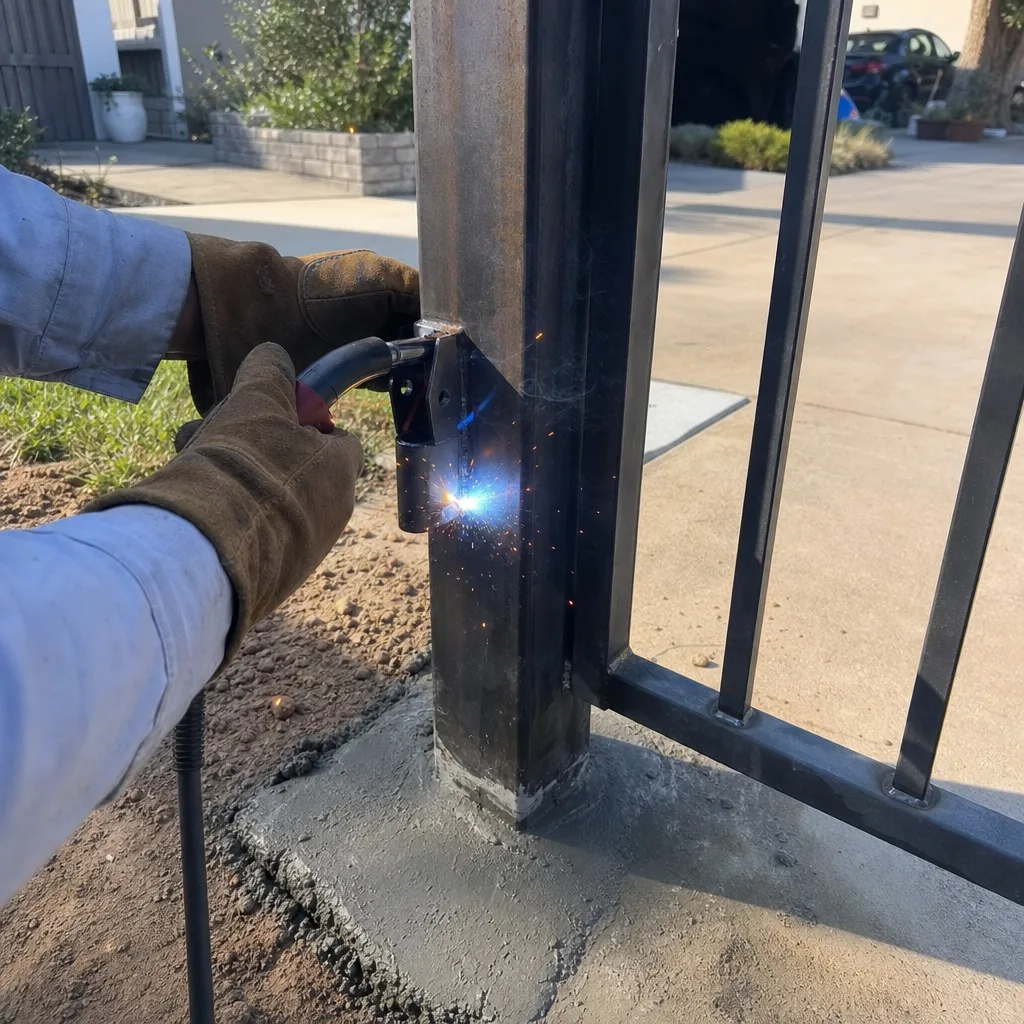
Gate systems sit at the intersection of heavy moving steel and line voltage. Some checks are safe and simple. Some are dangerous or require tools and training you don’t have, and attempting them makes the problem worse.
Safe to Check Yourself
- Visual inspection of hinges, post collars, and fastener heads. Look for rust, cracking, or gaps. If you see a problem, photograph it and call a technician.
- Photo-eye lens cleaning. Dry microfiber cloth, no chemicals. This solves a surprising number of phantom obstruction errors.
- Finish inspection. The finger-wipe test for chalking takes ten seconds and tells you a lot about UV damage.
- Cycle the gate and watch. Does it move smoothly? Does it hesitate at any point? Does it stop in the right position? Your observations are diagnostic gold for a technician.
- Check for debris in the track or along the gate path. Leaves, gravel, and irrigation overspray all interfere with operation.
Leave to a Technician
- Anything involving the operator’s internal wiring or control board. The capacitors in a gate operator can hold a charge even with the power off. Control boards are static-sensitive and easily ruined by a single discharge.
- Limit-switch adjustment. The internal switches are set to within a few degrees of travel. One wrong turn creates a gate that crashes into the end stops and damages the gearbox.
- Spring or tension adjustments on any gate type. Torsion springs on a swing gate store enormous energy. A spring that releases under tension can cause serious injury. This is not a DIY task under any circumstances.
- Post-footing repair or replacement. Digging out and re-setting a gate post requires concrete work, precise leveling, and often a temporary support for the gate leaf while the new concrete cures.
- Any diagnosis that requires a multimeter. If the problem is electrical and you’re not sure where, a technician with a meter and a wiring diagram will find it in minutes. Without those tools, you’re guessing.
Most of what goes wrong with a gate in Santa Ana is mechanical, not electronic. The gate operators we service, from Mighty Mule to BFT to FAAC, are built to work for years with minimal intervention. What fails is the stuff around them: the hinges, the posts, the seals, the wiring connections. That’s where the seasonal attention should go, and that’s what a good technician checks first before touching the motor or board.
If you have an operator that’s failing despite a clean installation, see our Gate Motor & Opener in Santa Ana page for the diagnostics we run before recommending any repair or replacement.
Common Mistakes to Avoid
- Skipping the October wind-season inspection. The single most common cause of gate failure in Santa Ana in November and December is limit-switch drift from wind season, and it’s preventable with a ten-minute check in early October. Waiting until the gate fails means a service call during the busiest repair window of the year.
- Using WD-40 on gate hinges. It’s a solvent that strips existing lubricant and leaves the hinge dry within weeks. Use a dry lithium spray or the manufacturer’s recommended grease.
- Ignoring a gate that hesitates or reverses intermittently. Intermittent symptoms are always progressive. The moisture, worn switch, or loose connection causing the hesitation is getting worse, not better. A $150 repair in October is a $500 motor replacement by February.
- Pressure-washing the gate and operator housing. High-pressure water forces moisture past seals and into bearings and enclosures. It doesn’t clean better; it damages faster. Soap, water, and a soft brush do the same job safely.
- Waiting for visible rust to address a chalking finish. Chalking is the early warning sign. By the time you see rust on a steel gate, the substrate has been exposed for months and the repair is now five times more expensive.
- Repainting a powder-coated aluminum gate without proper stripping. Paint doesn’t bond to oxidized powder coat. It peels within a year and traps moisture underneath, which accelerates the corrosion you were trying to prevent.
- Assuming a gate that opens and closes is a healthy gate. A gate can operate fine while the post footing is slowly failing, the control board is slowly corroding, and the hinges are slowly wallowing out. Seasonal inspection is about catching the slow failures before they become sudden ones.
When to Call a Professional
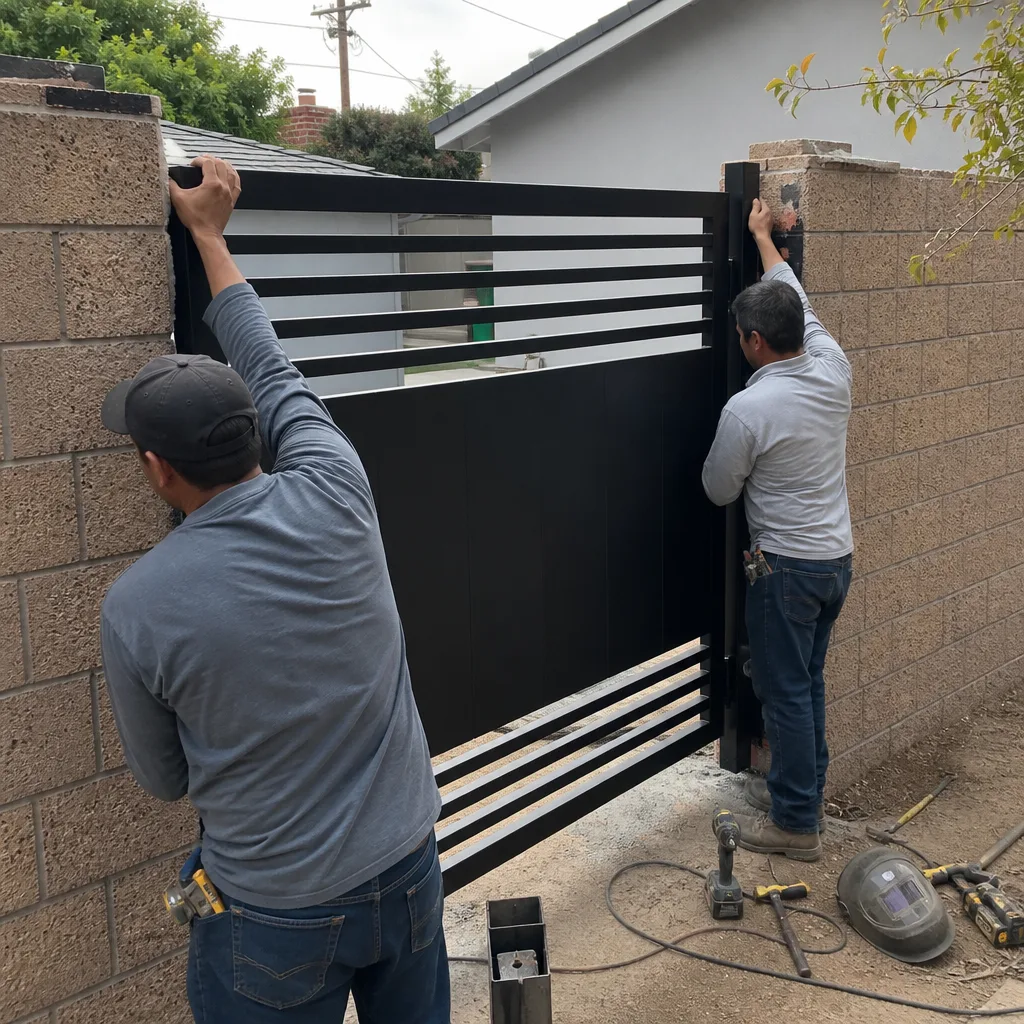
Call a professional when the gate is making a new noise, when it’s no longer stopping in the right position, when it’s hesitating or reversing for no clear reason, or when you see visible post lean or footing cracks. These are all signs of a progressive problem that will not fix itself. Call immediately if you smell burning plastic near the operator, if the gate moves without a command, or if any part of the gate or operator feels hot to the touch. Those are safety issues, not maintenance issues.
For homeowners in Santa Ana, Vance Gate Repair Santa Ana offers free estimates throughout the city, and a written price is delivered before any work begins under our Haven Standard. Call (657) 286-4793 to schedule an inspection or get a second opinion on any written estimate from another company.
For more on how we approach diagnostics and repair in this city, start at our Vance Gate Repair Santa Ana home page.
Frequently Asked Questions
Four times a year is the right cadence for Santa Ana’s climate: October (wind season), February (after any rain), June (June Gloom condensation), and August (peak UV and heat). Most homeowners can do the visual checks in ten minutes, and a full professional inspection takes under an hour. Call (657) 286-4793 to schedule a seasonal check with a written report and photo record.
Yes, and it does more damage than rain in this city. Sustained Diablo winds load a gate leaf with hundreds of pounds of lateral force, which shifts posts, works hinges loose, and throws limit switches out of calibration. The dry air also cracks neoprene seals, creating the moisture-entry pathway that fails when fog or irrigation water arrives. After any wind event over 24 hours, check your gate’s limit positions within 48 hours.
A seasonal gate inspection in Santa Ana typically runs between $95 and $175, depending on gate type, operator count, and whether any adjustments are made during the visit. Vance Gate Repair Santa Ana provides the written price before any work starts, so there is no surprise invoice at the end. Call (657) 286-4793 for an exact quote on your specific gate.
We recommend against it. Limit switches are set to precise travel positions, and one wrong adjustment can cause a gate to crash into the end stops and damage the gearbox. The internal mechanical parts are also under spring tension, and incorrect handling can cause injury. This is a five-minute job for a technician with the right training and tools, and a potentially expensive mistake for a homeowner without both.
Morning-only intermittent failures are the classic signature of June Gloom condensation in Santa Ana. The marine layer moisture condenses inside the operator housing overnight, the board shorts or misbehaves when it powers up in the morning, and the heat of the afternoon dries it out enough to work again. The moisture is still corroding the board even when the gate is working, so this should be inspected by a professional as soon as possible. Call (657) 286-4793 to have it checked.
Limit-switch drift caused by wind season is the single most common gate problem we see in Santa Ana, followed by June Gloom moisture intrusion on control boards and photo-eyes. Every other component, from hinges to operators, tends to fail slowly and predictably. The wind and the marine layer are the two local factors that accelerate those failures, and they’re the reason a seasonal calendar that follows the city’s actual stress cycles works better than a generic “inspect twice a year” instruction.
The Bottom Line
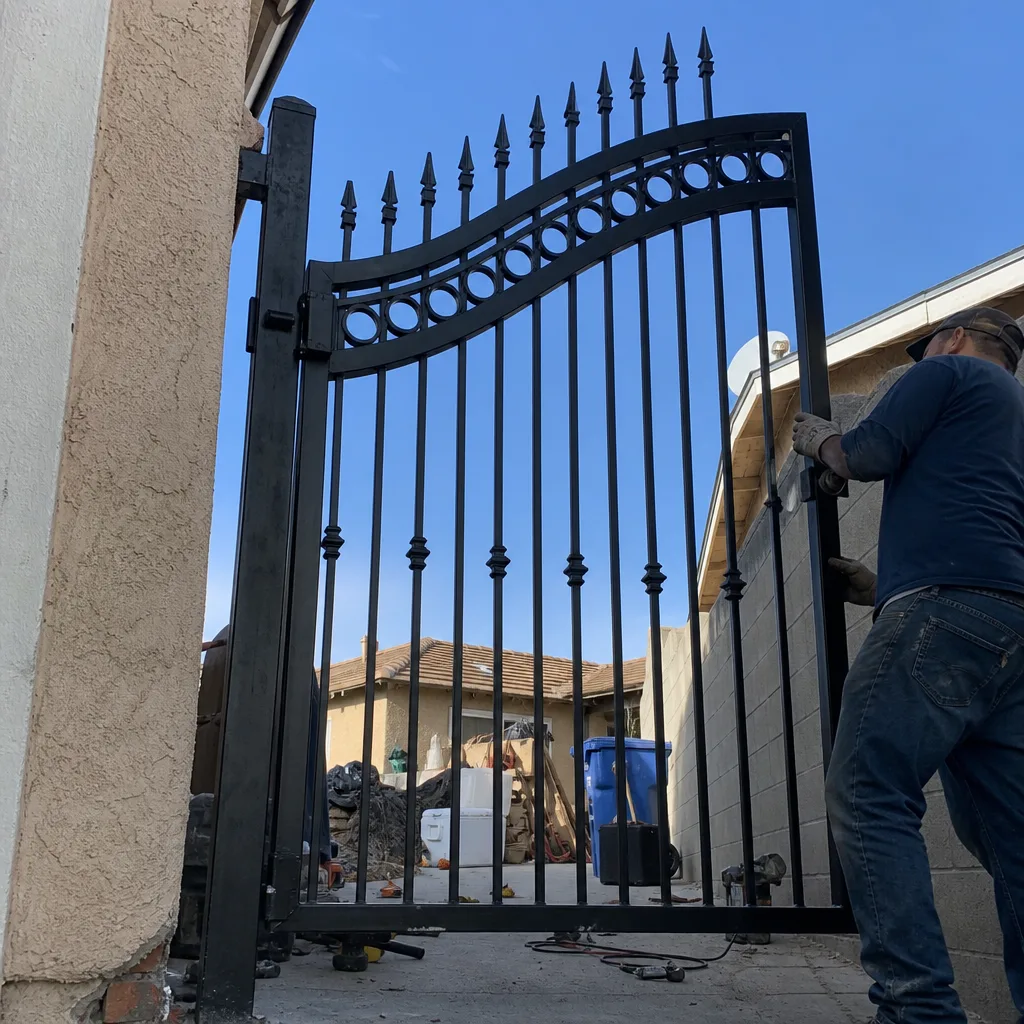
Your gate in Santa Ana lives through four distinct stress cycles every year, and the one that causes the most failures is the October-through-December wind season, not winter rain. Wind shifts limit switches and cracks seals. June Gloom corrodes control boards. Summer UV chalks finishes and exposes substrates. Rare rain tests footings and conduit. Four targeted inspections per year, each mapped to one of these cycles, will catch the slow failures before they become sudden ones. Write the date on your calendar, run the checks, and if anything looks wrong, call a professional before it becomes a repair. Call (657) 286-4793 for a free estimate, or see our Gate Installation in Santa Ana page if your gate has reached the end of its service life.
Written by Adrian Vance, Owner at Vance Gate Repair Santa Ana, serving Santa Ana since 2014.